

Introduction
As businesses face growing pressure to reduce plastic waste and improve environmental performance, sustainable packaging has become an important consideration across e-commerce, logistics, manufacturing, retail, and industrial supply chains. Companies are looking for protective packaging solutions that can protect products during transportation while reducing their environmental impact.
A Heavy Duty Paper Cushion Machine provides an efficient solution for businesses that need reliable cushioning materials for demanding packaging applications. By converting paper into protective cushioning material on demand, these machines can help reduce dependence on plastic-based protective packaging while improving packaging efficiency.
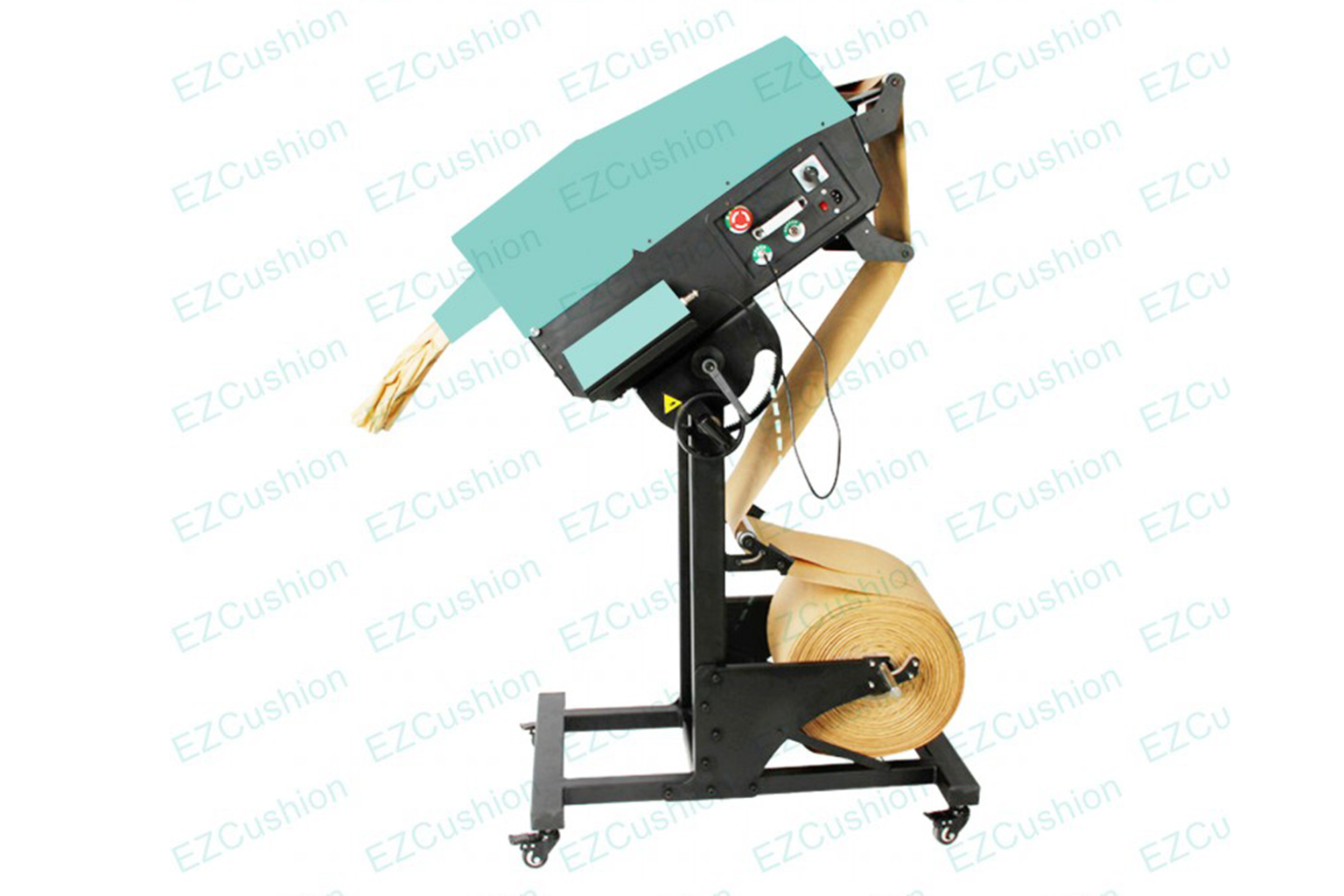
Reduce Dependence on Plastic Packaging Materials
Traditional protective packaging often relies on plastic materials such as bubble wrap, plastic air pillows, and foam. Although these materials can provide effective cushioning, they can also create challenges for waste management and recycling.
A Heavy Duty Paper Cushion Machine uses paper as the primary packaging material, providing an alternative for companies looking to reduce their use of plastic cushioning.
Paper-based cushioning can be used to:
Fill empty spaces inside cartons
Protect products from impact
Prevent movement during transportation
Separate products inside packages
Provide surface protection for certain items
For companies pursuing plastic-reduction goals, replacing part of their plastic cushioning with paper can be an important step toward more sustainable packaging.
Use Recyclable Paper-Based Materials
One of the key advantages of paper cushioning is the recyclability of paper materials in appropriate waste-management systems.
Heavy duty paper cushion machines can process suitable paper rolls or sheets into cushioning materials designed for packaging applications. After the package reaches the customer, the paper cushioning can generally be handled through existing paper recycling streams, depending on the material composition and local recycling requirements.
This creates a packaging cycle that can be easier to manage than packaging solutions that combine multiple difficult-to-separate materials.
For businesses, selecting recyclable packaging materials can also support broader environmental objectives and help communicate a stronger sustainability commitment to customers.
Produce Packaging Material On Demand
Another important advantage is on-demand production.
Instead of purchasing and storing large quantities of pre-made cushioning materials, businesses can use a Heavy Duty Paper Cushion Machine to produce paper cushioning when needed.
This approach can help reduce:
Excess packaging inventory
Storage requirements
Unnecessary material handling
Packaging material shortages
Waste caused by unused or damaged cushioning products
On-demand production is particularly useful for warehouses and fulfillment centers handling different product sizes and order volumes.
Improve Packaging Material Efficiency
Sustainable packaging is not simply about choosing a recyclable material. Businesses should also consider how efficiently that material is used.
A professional paper cushion machine can produce cushioning material according to actual packaging requirements. Operators can adjust the amount of cushioning used based on the product, carton size, and transportation requirements.
This helps avoid the common problem of using excessive protective material simply because pre-made packaging materials are available in fixed sizes.
Better material management can contribute to lower packaging consumption while maintaining the required level of product protection.
Support High-Volume Sustainable Packaging
For companies with large packaging volumes, manual preparation of paper cushioning can become slow and labor-intensive.
A Heavy Duty Paper Cushion Machine is designed for more demanding packaging environments where businesses need consistent and continuous production.
It can support applications such as:
E-commerce fulfillment
Distribution centers
Industrial packaging
Furniture packaging
Electronics packaging
Automotive components
Machinery and equipment
Retail fulfillment
By automating part of the cushioning production process, businesses can combine sustainability with higher packaging productivity.
Reduce Packaging Waste in the Supply Chain
Packaging waste can occur at several stages, including material production, storage, packaging operations, transportation, and final disposal.
Producing paper cushioning directly at the packing station can help businesses better control how much material they use for each order.
For example, a warehouse may produce only the amount of cushioning needed to fill the empty space around a particular product. This can reduce unnecessary material consumption compared with using oversized quantities of pre-produced packaging.
The result is a more flexible packaging process with greater control over material usage.
Combine Sustainability with Product Protection
Sustainable packaging must still protect products effectively. Reducing packaging materials is not useful if it results in increased product damage during transportation.
Paper cushioning can provide protection by absorbing impact and filling empty spaces inside cartons. Depending on the machine configuration and paper material, it can be used for different cushioning requirements.
For industrial packaging, a heavy duty machine can be particularly valuable because it is designed for higher workloads and demanding production environments.
The goal is to achieve a balance between:
Product Protection + Material Efficiency + Operational Efficiency + Sustainability
This balance is essential for practical sustainable packaging.
Help Reduce Packaging Storage Requirements
Pre-made protective packaging materials can occupy significant warehouse space. Businesses with high packaging volumes may need dedicated areas for storing bubble wrap, air pillows, foam, or other cushioning products.
With an on-demand paper cushioning system, paper raw materials can be stored in a more compact form and converted into cushioning material when required.
This can help optimize warehouse space and simplify packaging-material management.
For facilities where storage space is limited, this can provide both operational and environmental benefits.
Suitable for E-Commerce and Fulfillment Operations
The growth of e-commerce has significantly increased demand for protective packaging. Products may pass through multiple transportation and handling stages before reaching the customer.
At the same time, consumers are increasingly paying attention to packaging waste.
A Heavy Duty Paper Cushion Machine can help fulfillment centers produce paper cushioning quickly according to different order requirements. This makes it possible to provide product protection while reducing reliance on plastic cushioning materials.
For e-commerce companies, paper-based packaging can also support sustainability-focused branding and customer expectations.
Support a More Sustainable Packaging Strategy
A Heavy Duty Paper Cushion Machine should not be viewed as a single solution for sustainability. Instead, it can become part of a broader packaging optimization strategy.
Businesses can combine paper cushioning with:
Recyclable cartons
Paper tape
Right-sized packaging
Reduced packaging layers
Reusable transport packaging
Sustainable paper materials
Automated packaging equipment
This integrated approach can help companies gradually improve their packaging systems without sacrificing productivity or product protection.
How to Choose a Heavy Duty Paper Cushion Machine for Sustainable Packaging
When selecting a machine, businesses should evaluate more than its environmental benefits. Important factors include:
1. Paper Compatibility
Check whether the machine supports the paper type, thickness, width, and weight required for your applications.
2. Production Capacity
Choose a machine with sufficient output for your current packaging volume and expected future growth.
3. Automation Level
Automatic feeding, cutting, forming, and control functions can improve productivity and reduce manual operations.
4. Cushioning Performance
The produced paper cushioning should provide adequate protection for the products being packaged.
5. Ease of Maintenance
Simple maintenance procedures can help reduce downtime and extend equipment service life.
6. Space Requirements
Consider the machine’s footprint and whether it can be integrated into the existing packaging workstation or production line.
7. Energy Efficiency
Energy consumption should also be considered when evaluating the machine’s overall environmental performance.
Conclusion
A Heavy Duty Paper Cushion Machine can play an important role in sustainable packaging by helping businesses replace part of their plastic cushioning materials with paper-based alternatives. Its ability to produce cushioning material on demand can also improve material efficiency, reduce storage requirements, and support high-volume packaging operations.
For businesses in e-commerce, logistics, manufacturing, and industrial packaging, the combination of paper-based materials, on-demand production, efficient material usage, and reliable product protection makes heavy duty paper cushion machines a practical option for developing more sustainable packaging processes.
As sustainable packaging continues to evolve, investing in efficient paper cushioning equipment can help businesses reduce plastic dependence while maintaining the productivity and protection required for modern packaging operations.
FAQ
1. What is a Heavy Duty Paper Cushion Machine?
A Heavy Duty Paper Cushion Machine is packaging equipment that converts paper materials into protective cushioning for filling empty spaces, absorbing impacts, and preventing products from moving inside cartons during transportation.
2. Is a Heavy Duty Paper Cushion Machine environmentally friendly?
Yes. It can support more sustainable packaging by using paper-based cushioning materials instead of plastic-based alternatives. Suitable paper materials can also be recyclable, depending on their composition and local recycling systems.
3. Can a Heavy Duty Paper Cushion Machine replace plastic packaging?
It can replace certain types of plastic cushioning, such as air pillows and some bubble-wrap applications. However, the most suitable replacement depends on the product, packaging requirements, and transportation conditions.
4. What are the main benefits of using a Heavy Duty Paper Cushion Machine?
Key benefits include reduced plastic use, on-demand cushioning production, improved packaging efficiency, reduced storage requirements, consistent cushioning output, and suitability for high-volume packaging operations.
5. What industries can use Heavy Duty Paper Cushion Machines?
They are suitable for e-commerce, logistics, warehousing, manufacturing, electronics, furniture, automotive components, machinery, retail fulfillment, and other industries that require protective packaging.


