

Introduction
As demand for paper-based protective packaging continues to grow, packaging manufacturers and businesses are looking for ways to improve production efficiency while maintaining consistent material quality. A kraft paper bubble making machine helps transform kraft paper into structured cushioning materials used to protect products during storage, handling, and transportation. However, the machine’s actual performance depends on more than its rated production speed.
Paper quality, machine settings, operator skills, maintenance practices, workflow design, and production planning all influence output and operating costs. By optimizing these factors, businesses can reduce material waste, minimize downtime, improve product consistency, and make better use of their equipment.
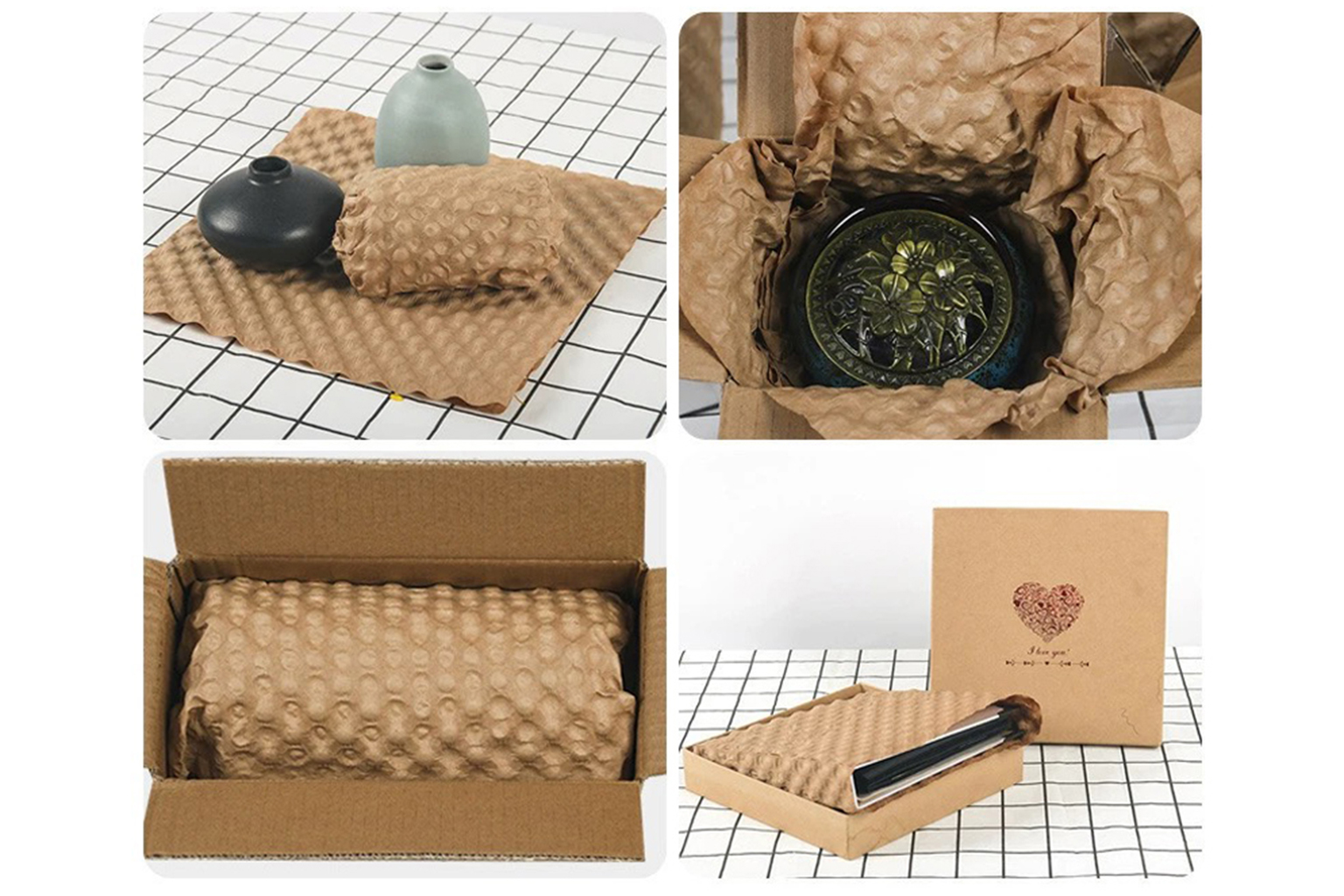
Select the Right Kraft Paper for Stable Production
Raw material quality is one of the most important factors affecting machine performance. Inconsistent kraft paper can cause feeding interruptions, uneven forming, paper tearing, and unnecessary production waste.
Before starting production, confirm that the paper meets the machine manufacturer’s specifications for grammage, thickness, width, roll diameter, and other relevant properties. Paper that falls outside the recommended range may reduce forming stability or require frequent adjustments.
It is also important to maintain consistent material quality between batches. Differences in moisture content, strength, and paper dimensions can affect feeding behavior and the finished cushioning structure.
Businesses should establish clear incoming material inspection procedures and work with reliable paper suppliers. Consistent raw materials help reduce troubleshooting time and support more predictable production.
Optimize Machine Settings and Operating Speed
Increasing machine speed does not always improve overall productivity. If the machine operates too quickly for the selected paper or forming configuration, it may produce more defects, increase material waste, or require frequent stops.
Operators should begin with the manufacturer’s recommended settings and adjust the machine according to actual production conditions. Depending on the equipment design, relevant parameters may include feeding speed, paper tension, forming settings, cutting length, and output handling.
During optimization, change one parameter at a time and record the results. This approach makes it easier to identify which adjustments improve output without compromising material quality.
The objective is to achieve the highest practical production rate while maintaining stable feeding, consistent forming, and acceptable defect levels. A slightly lower operating speed may deliver better overall efficiency if it significantly reduces rejected material and interruptions.
Establish Standard Operating Procedures
Consistent operating procedures help reduce production errors and make machine performance less dependent on individual operators.
A standard operating procedure should cover paper roll installation, machine startup, parameter settings, production monitoring, material collection, shutdown, and basic troubleshooting. Operators should also understand the machine’s safety requirements and the correct response to common operating problems.
Standardized procedures are particularly useful when multiple operators work across different shifts. They help ensure that equipment is configured consistently and that production changes are documented.
Businesses can also maintain a simple production log recording operating speed, paper type, output volume, defects, downtime, and maintenance activities. Over time, these records can reveal recurring problems and opportunities for improvement.
Minimize Paper Waste During Production
Material waste directly affects production costs and usable output. Waste may occur during machine setup, paper feeding, forming adjustments, cutting, or the handling of defective material.
To reduce waste, ensure that paper rolls are installed correctly and that the machine is configured for the selected material before production begins. When changing paper specifications or output requirements, follow a consistent setup procedure to avoid repeated trial-and-error adjustments.
Operators should inspect the finished cushioning material regularly for uneven structures, tearing, inconsistent dimensions, or other defects. Identifying problems early prevents large quantities of unsuitable material from being produced.
It is also helpful to track waste by cause rather than recording only the total amount. For example, separating startup waste from feeding problems and quality defects helps managers identify which corrective actions will provide the greatest benefit.
Implement Preventive Maintenance
Unexpected equipment failures can interrupt production, delay orders, and increase repair expenses. Preventive maintenance helps reduce these risks by identifying wear and operating problems before they cause major downtime.
Regular inspections should cover the paper feeding system, forming components, rollers, cutting mechanisms, drive components, and electrical controls, as applicable to the machine design.
Cleaning paper dust and accumulated debris can help maintain stable operation. Lubrication, component adjustments, and replacement of worn parts should follow the manufacturer’s recommendations rather than an improvised schedule.
Businesses should also keep essential spare parts available when long replacement lead times could interrupt production. Maintenance records can help identify recurring failures and determine whether components require more frequent inspection.
Before cleaning, adjusting, or servicing internal mechanisms, operators must follow the manufacturer’s shutdown and energy-isolation procedures.
Improve Workflow and Material Handling
Even when a kraft paper bubble making machine operates efficiently, poor material handling can limit total production performance.
The arrangement of raw material storage, machine feeding, finished material collection, inspection, and packaging should allow materials to move through the production area with minimal unnecessary handling.
Keep compatible kraft paper close enough to the machine for efficient replenishment, while ensuring that storage does not obstruct access or create safety hazards. Finished cushioning material should be collected and transferred without damaging its structure or interrupting the machine unnecessarily.
For businesses supplying multiple packaging stations, production scheduling should also account for the actual demand at each station. Producing the right material in the right quantity helps prevent bottlenecks, excessive inventory, and unnecessary changeovers.
Where appropriate, integrate cutting, collection, or downstream packaging processes to reduce manual handling and improve workflow continuity.
Train Operators to Recognize Production Problems
Operator experience can have a significant effect on production efficiency. Trained employees can identify early warning signs, respond to minor issues appropriately, and avoid adjustments that create additional defects.
Training should cover machine controls, supported paper specifications, normal operating conditions, quality inspection, routine maintenance, and emergency procedures. Operators should understand how changes in paper characteristics or operating settings may affect the finished material.
It is also important to define which problems operators can resolve independently and which require maintenance personnel or manufacturer support. Clear escalation procedures help prevent minor issues from becoming extended production interruptions.
Refresher training and regular reviews of production records can help maintain consistent operating practices across shifts.
Monitor Production Efficiency with Key Performance Indicators
Businesses cannot improve production efficiency consistently without measuring performance. Tracking a small number of relevant indicators helps identify problems and evaluate whether corrective actions are effective.
Useful indicators include:
Usable output: The amount of acceptable cushioning material produced during a defined period.
Machine downtime: The time the machine is unavailable because of failures, adjustments, material shortages, or other interruptions.
Material waste rate: The proportion of input material that cannot be used as acceptable finished output.
Production cost per unit: The total production cost divided by the amount of usable material produced.
Defect rate: The proportion of finished material that fails the established quality requirements.
For example, a machine may produce more material per hour after a speed adjustment, but the improvement may be offset by a higher defect rate. Monitoring both usable output and material waste provides a more accurate picture of actual efficiency.
Reviewing these indicators regularly allows managers to prioritize improvements based on measurable results rather than assumptions.
Reduce Changeover Time and Improve Production Planning
Frequent changes in paper specifications, output dimensions, or production requirements can reduce productive operating time.
When possible, group similar production orders together to minimize unnecessary changeovers. Prepare the required paper rolls, operating instructions, and production documentation before the machine stops for a new job.
A standardized changeover checklist can help operators verify paper compatibility, settings, cutting requirements, and output quality before restarting production.
Production planning should also consider order priorities, expected material consumption, machine availability, and maintenance schedules. Coordinating these factors reduces avoidable interruptions and helps businesses meet delivery commitments more reliably.
However, production batches should remain aligned with customer demand. Producing excessive quantities simply to avoid a changeover can increase inventory and tie up working capital.
Evaluate Automation and Equipment Upgrades
If production remains constrained despite improvements to materials, settings, and maintenance, additional automation or equipment upgrades may be worth considering.
Depending on the machine model, options may include automatic paper feeding, digital control systems, adjustable speed, automatic cutting, or improved output collection. These functions may reduce manual intervention and improve consistency, especially in high-volume operations.
Before investing, identify the specific production problem the upgrade is expected to solve. For example, automatic cutting may reduce manual handling, while improved feeding controls may help address recurring paper alignment problems.
Compare the expected improvement in usable output, labor requirements, waste, and downtime against the purchase and installation costs. An upgrade is worthwhile when its measurable benefits justify the investment and it is compatible with the existing equipment.
Build a Continuous Improvement Process
Production efficiency is not achieved through a single adjustment. It requires ongoing monitoring, evaluation, and refinement.
Start by establishing baseline performance for output, waste, downtime, and production cost. Identify the largest recurring loss, introduce a targeted improvement, and compare the results against the baseline.
For example, if paper feeding interruptions account for a significant proportion of downtime, investigate roll installation, paper consistency, and feeding settings before changing unrelated machine parameters.
Document successful adjustments and update operating procedures so that improvements can be repeated across shifts. Reviewing production data with operators and maintenance personnel can also reveal practical problems that may not be obvious from output figures alone.
A structured improvement process helps businesses maintain efficiency gains as production volumes, materials, and customer requirements change.
Common Mistakes That Reduce Production Efficiency
Several practices can undermine the performance of a kraft paper bubble making machine.
Running the machine too fast: Excessive speed may increase defects and waste rather than improve usable output.
Using inconsistent paper: Variations in material properties can cause feeding and forming problems.
Ignoring early warning signs: Unusual noise, repeated jams, or inconsistent output may indicate problems that need attention.
Skipping preventive maintenance: Worn or dirty components can reduce production stability and increase downtime.
Measuring output without checking quality: Higher gross output does not necessarily mean more usable cushioning material.
Overlooking workflow bottlenecks: Slow material replenishment or finished-product collection can limit the entire production process.
Addressing these issues systematically can improve machine utilization and help control operating costs.
Conclusion
Improving production efficiency with a kraft paper bubble making machine requires a combination of suitable raw materials, optimized operating settings, standardized procedures, preventive maintenance, effective workflow design, and consistent performance monitoring.
Businesses should focus on usable output rather than machine speed alone. Reducing waste, preventing avoidable downtime, training operators, and tracking key production indicators can improve productivity without requiring immediate investment in new equipment.
For packaging manufacturers and protective packaging suppliers, a structured approach to continuous improvement helps maintain consistent material quality, control production costs, and make better use of existing machinery. When additional capacity or automation is necessary, investment decisions should be based on clearly identified production bottlenecks and measurable business benefits.
FAQ
How can I improve the production efficiency of a kraft paper bubble making machine?
You can improve production efficiency by using compatible kraft paper, optimizing machine settings, standardizing operating procedures, reducing material waste, implementing preventive maintenance, and training operators. Monitoring usable output and downtime also helps identify areas for improvement.
What factors affect the production speed of a kraft paper bubble making machine?
Production speed depends on machine design, paper specifications, forming technology, operating settings, automation level, and material handling. Actual output may also be affected by setup time, quality defects, and unplanned downtime.
How can I reduce kraft paper waste during production?
Ensure that paper rolls are installed correctly, use materials that meet the machine’s specifications, and optimize feeding and forming settings. Regular quality inspections can help identify defects early, while tracking waste by cause makes it easier to implement effective corrective measures.
Why is preventive maintenance important for production efficiency?
Preventive maintenance helps identify worn components, feeding problems, and other potential failures before they cause extended downtime. Regular cleaning, inspections, and timely replacement of worn parts can improve production stability and reduce repair costs.
How does kraft paper quality affect machine performance?
Paper grammage, thickness, strength, moisture content, and dimensional consistency can influence feeding stability and forming quality. Consistent raw materials help reduce paper jams, tearing, irregular structures, and unnecessary production interruptions.


