

Introduction
Crinkle paper is widely used as a packaging filler for protecting products during shipping while also improving the appearance of gift boxes, retail packages, and e-commerce orders. As packaging volumes increase, manually cutting and crinkling paper can become time-consuming and difficult to maintain consistently.
A Roll Feeding Crinkle Paper Shredding Machine automates this process by feeding paper from a continuous roll and processing it into crinkle paper strips. The machine combines controlled paper feeding, cutting, and crinkling to produce packaging material efficiently and consistently.
Understanding how a roll feeding crinkle paper shredding machine works can help packaging companies select the right equipment and make better decisions about paper materials, production capacity, and machine configuration.
What Is a Roll Feeding Crinkle Paper Shredding Machine?
A Roll Feeding Crinkle Paper Shredding Machine is equipment designed to convert paper rolls into crinkle paper for packaging applications. Instead of feeding individual sheets, the machine uses a roll feeding system to continuously introduce paper into the processing mechanism.
During operation, the paper passes through a series of feeding, cutting, and crinkling components. The paper is first pulled from the roll at a controlled speed, then processed into narrow strips and formed into a crinkled structure.
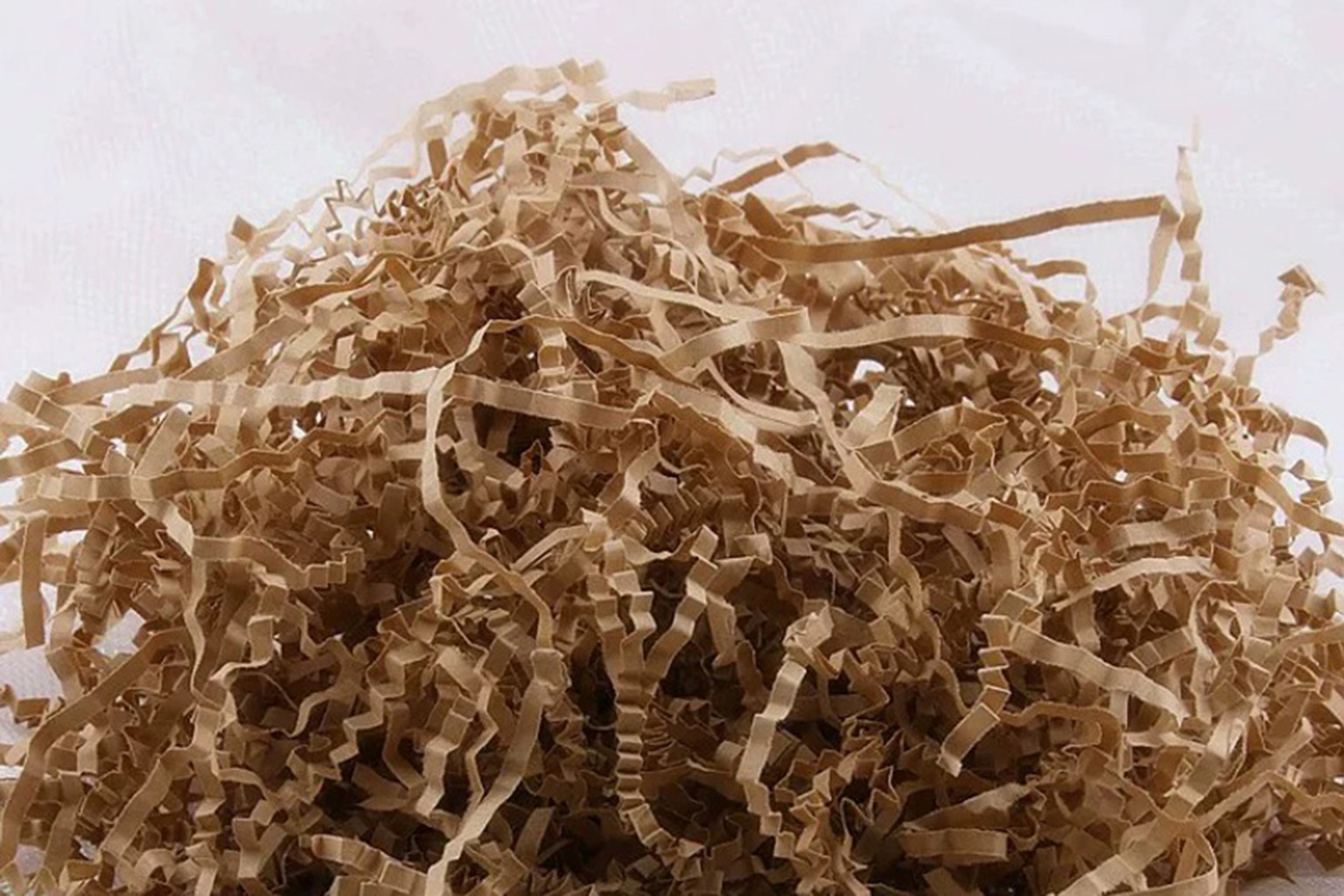
The resulting material has greater volume than flat paper and can be used to fill empty spaces around products. Depending on the paper type and machine settings, the finished crinkle paper can provide cushioning, separation, and decorative value.
How Does a Roll Feeding Crinkle Paper Shredding Machine Work?
The working process can generally be divided into several connected stages: paper roll feeding, tension control, cutting, crinkling, and finished material collection. Each stage affects the quality and consistency of the final crinkle paper.
1. Paper Roll Feeding
The process starts with a roll of suitable paper mounted on the machine’s feeding system. Kraft paper and recycled paper are commonly used, although the exact material range depends on the machine design.
The feeding mechanism continuously pulls the paper from the roll and guides it toward the processing section. Maintaining stable feeding is important because changes in paper tension or alignment can affect the final product.
A well-designed roll feeding system helps prevent problems such as paper deviation, uneven feeding, and unnecessary production interruptions.
2. Paper Tension and Alignment
Before the paper reaches the cutting and crinkling section, it needs to remain properly aligned. The feeding system controls the movement of the paper while maintaining suitable tension.
If the paper is too loose, it may wrinkle or shift during processing. If the tension is too high, the paper may stretch or become difficult to process. Stable tension allows the cutting and crinkling mechanisms to work more consistently.
For continuous packaging production, reliable paper feeding is particularly important because a small feeding problem can affect a large amount of material over time.
3. Paper Cutting and Shredding
After feeding, the paper enters the cutting or shredding section. Depending on the machine configuration, rotating blades or other cutting components divide the continuous paper into narrow strips.
The width of these strips influences the appearance, volume, and packaging performance of the finished crinkle paper. Different packaging applications may require different strip widths or paper specifications.
The cutting system therefore plays an important role in determining the consistency of the final material. Sharp and properly maintained cutting components can help produce clean, uniform paper strips.
4. Crinkling and Forming
After the paper has been cut, the strips pass through the crinkling or forming mechanism. Rollers or forming components deform the flat paper strips into a crinkled, zigzag, or spring-like structure.
This step increases the apparent volume of the paper. A relatively lightweight amount of paper can therefore occupy more space inside a package, making it useful for filling gaps around products.
The crinkled structure also gives the material its characteristic appearance, which is particularly valuable for gift packaging, subscription boxes, and premium retail packaging.
5. Finished Crinkle Paper Collection
Once the paper has been cut and crinkled, the finished material exits the machine through the discharge area. It can then be collected in containers, bags, or other collection systems.
For packaging operations, the finished crinkle paper can be used immediately or stored for later packing. In some automated packaging environments, the machine can be positioned close to the packing station to reduce material handling.
What Happens to the Paper During Processing?
The basic transformation is straightforward:
Paper Roll → Continuous Feeding → Cutting/Shredding → Crinkling → Finished Crinkle Paper
The original flat paper roll is transformed into lightweight strips with a three-dimensional structure. This structure gives the material more volume and allows it to occupy empty spaces inside packaging boxes.
The machine does not simply reduce the paper into small pieces. Instead, it creates a controlled strip structure that can combine void filling, product separation, cushioning, and visual presentation.
This is one reason crinkle paper differs from conventional shredded office paper or randomly cut paper.
What Types of Paper Can Be Used?
The suitable paper material depends on the machine specifications. Kraft paper is one of the most common choices because it offers good strength and is available in different weights and colors.
Recycled paper is another option for companies looking to incorporate recycled content into their packaging materials. Colored or printed paper may also be used when appearance and branding are important.
Before purchasing a machine, users should check the manufacturer’s specifications for supported paper thickness, paper width, roll diameter, material type, and maximum feeding capacity. Using paper outside the recommended range can affect feeding stability and finished product quality.
Why Is Roll Feeding Important?
The roll feeding system is one of the defining features of this type of crinkle paper machine. With sheet-fed processing, operators need to repeatedly load individual sheets. This can create interruptions and increase manual handling.
Roll feeding allows a larger quantity of paper to be processed continuously. Once the paper roll is installed correctly, the machine can feed material automatically through the processing system.
This makes roll feeding particularly useful for e-commerce fulfillment centers, packaging suppliers, gift packaging businesses, warehouses, and other operations that consume crinkle paper regularly.
Benefits of Using a Roll Feeding Crinkle Paper Shredding Machine
Higher Packaging Efficiency
Automating the paper processing operation can significantly reduce the time required to prepare packaging filler. Operators can focus more on packing and other production tasks rather than manually cutting and crinkling paper.
Consistent Material Output
Automated feeding and processing help produce more consistent paper strips and crinkle structures. Consistency is important for businesses that need the same packaging appearance across large numbers of orders.
Reduced Manual Labor
A roll feeding crinkle paper machine reduces repetitive tasks associated with manual paper preparation. This can be particularly beneficial when packaging volumes increase.
Flexible Packaging Applications
Crinkle paper can be used for many products, including cosmetics, candles, glassware, food gift boxes, accessories, small electronics, handicrafts, and retail products. The same machine can therefore support different packaging requirements when the appropriate paper material is selected.
Paper-Based Packaging Option
For businesses looking to reduce their reliance on certain plastic void-fill materials, paper-based crinkle filler can be an alternative worth considering. Kraft paper and recycled paper can be selected according to packaging requirements and available recycling systems.
Where Are Roll Feeding Crinkle Paper Machines Used?
E-Commerce Packaging
Online retailers need efficient ways to protect products during shipping. Crinkle paper can fill empty spaces inside cartons and help prevent products from moving excessively during transportation.
Gift and Retail Packaging
Crinkle paper is also widely used in gift boxes, hampers, subscription boxes, and branded retail packaging. Its textured appearance adds volume and creates a more attractive unboxing experience.
Cosmetics and Personal Care
Cosmetic products often require packaging that combines protection with visual appeal. Colored kraft paper or other decorative paper can be processed into crinkle filler for skincare products, cosmetics, fragrances, and gift sets.
Fragile Product Packaging
For products such as glass bottles, ceramics, and other fragile items, crinkle paper can be placed around the product to provide void filling and additional separation inside the carton. The overall packaging design should still be matched to the product’s weight and fragility.
Factors That Affect Machine Performance
Several factors can influence the performance of a Roll Feeding Crinkle Paper Shredding Machine. Paper thickness and quality are important because different materials behave differently during cutting and crinkling.
The paper roll dimensions and feeding tension also affect production stability. Incorrect roll alignment or unsuitable paper tension can lead to uneven feeding and inconsistent output.
Machine maintenance is another important factor. Cutting components should be kept clean and inspected regularly, while feeding and forming components should be maintained according to the manufacturer’s recommendations.
Production requirements should also be considered. A machine designed for small-scale packaging may not be suitable for a high-volume packaging line, so businesses should compare required output with the machine’s rated capacity before purchasing.
How to Choose a Roll Feeding Crinkle Paper Shredding Machine
When selecting equipment, start by determining how much crinkle paper your business needs per day or per hour. This helps establish the required production capacity.
Next, evaluate the paper materials you plan to use. Check whether the machine supports your preferred kraft paper or recycled paper specifications and whether it can accommodate your roll width and thickness.
Other factors include machine dimensions, power requirements, cutting width, feeding method, operating controls, maintenance requirements, safety features, and technical support.
For companies with long-term production requirements, it is also important to consider the machine manufacturer’s experience and after-sales service. A machine is a long-term investment, so reliable technical support can be just as important as the initial equipment price.
Conclusion
A Roll Feeding Crinkle Paper Shredding Machine transforms continuous paper rolls into crinkled paper strips through a controlled process of feeding, cutting, and forming. The roll feeding system provides continuous material input, while the cutting and crinkling mechanisms create the three-dimensional structure required for packaging filler.
Because the process is automated, the machine can help packaging businesses improve production efficiency, reduce repetitive manual work, and achieve more consistent crinkle paper output.
For e-commerce, retail, gift, cosmetics, and general packaging applications, choosing the right combination of machine capacity and paper material is essential. By understanding how the machine works and evaluating factors such as paper compatibility, feeding stability, output requirements, and maintenance, businesses can select equipment that better matches their packaging production needs.
FAQ
What does a Roll Feeding Crinkle Paper Shredding Machine do?
It continuously feeds paper from a roll and cuts and crinkles it into three-dimensional paper strips used as packaging filler.
What paper is commonly used in a crinkle paper shredding machine?
Kraft paper and recycled paper are common choices. The exact suitable paper thickness and roll specifications depend on the machine model.
How is crinkle paper different from regular shredded paper?
Crinkle paper is processed into structured, crinkled strips rather than simply being randomly shredded. Its three-dimensional structure provides greater volume for void filling and packaging presentation.
Can crinkle paper be used for fragile products?
Yes. It can be used as void filler and product separation material for fragile goods such as glassware and ceramics, although the complete packaging design should match the product’s protection requirements.
What should I consider when buying a roll feeding crinkle paper machine?
Consider production capacity, paper type, paper thickness, roll dimensions, cutting width, feeding stability, machine size, power consumption, maintenance, safety features, and after-sales technical support.


