

Introduction
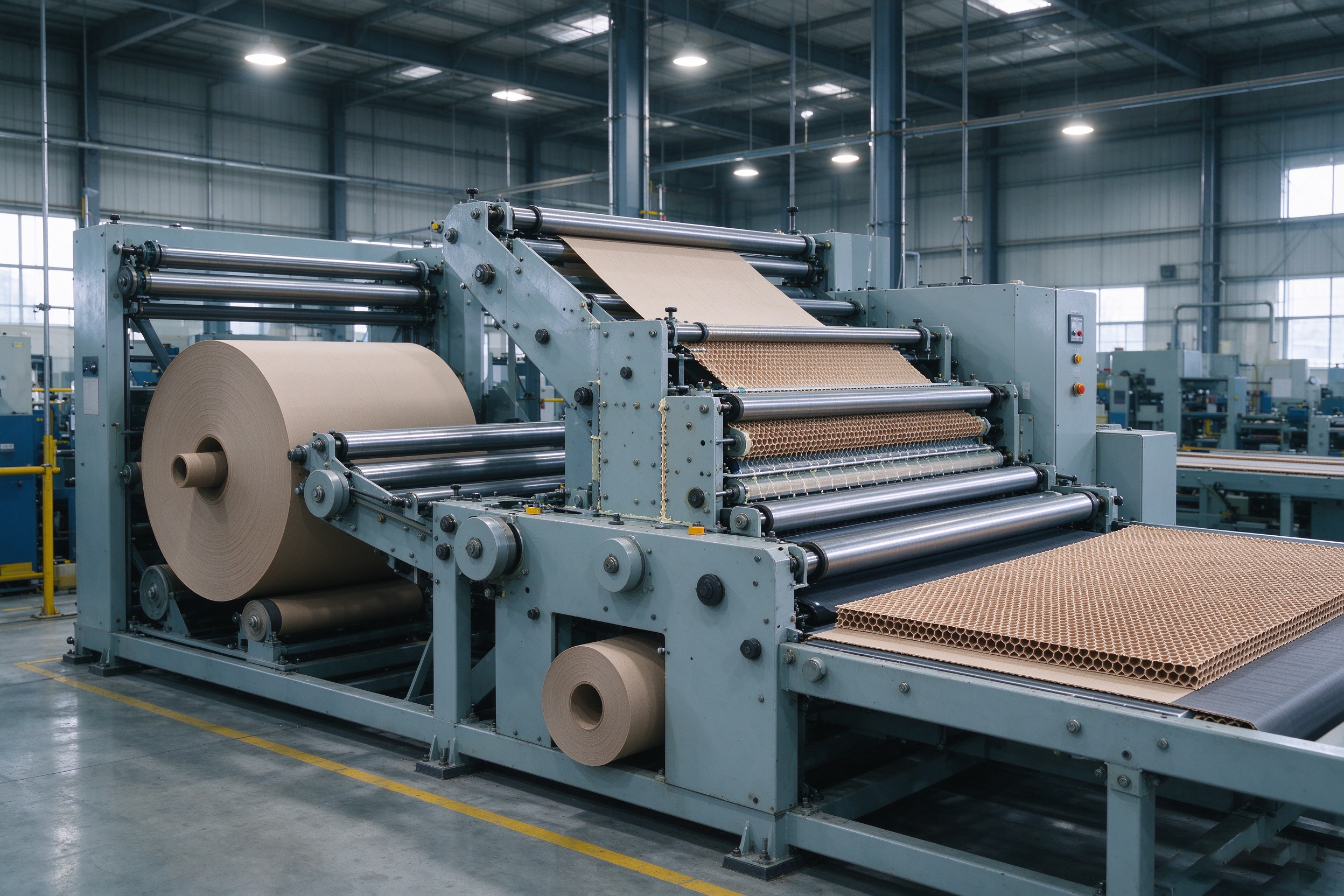
A honeycomb paper making machine is packaging equipment designed to convert suitable paper materials into honeycomb paper for protective packaging applications. Honeycomb paper can be expanded into a three-dimensional structure that provides cushioning, wrapping, and surface protection for different types of products.
As businesses look for more efficient and paper-based packaging materials, honeycomb paper has become an option for e-commerce packaging, fulfillment operations, logistics, retail packaging, and industrial product protection.
However, honeycomb paper making machines are not all designed in the same way. Different machines may vary in production speed, paper width, automation level, output format, and processing functions. Understanding the main machine types and their functions can help businesses select equipment that matches their packaging requirements.
What Is a Honeycomb Paper Making Machine?
A honeycomb paper making machine is a mechanical system used to process paper into honeycomb packaging material. The machine typically feeds paper through a forming or expanding mechanism that creates the characteristic honeycomb structure.
Depending on the machine design, additional functions may include automatic feeding, length control, cutting, tension adjustment, and other production operations.
The resulting honeycomb paper can be used as wrapping material, void filler, protective cushioning, or surface protection. Its lightweight structure also makes it convenient to store, transport, and use during packaging.
Main Types of Honeycomb Paper Making Machines
The exact classification of honeycomb paper machines can vary between manufacturers. In practical applications, machines can be distinguished according to production capacity, automation level, output format, and intended use.
1. Compact Honeycomb Paper Making Machines
Compact machines are designed for businesses with relatively moderate packaging requirements or limited production space.
Their smaller footprint can make them suitable for retail packaging areas, small warehouses, e-commerce businesses, and other operations that do not require continuous high-volume production.
These machines can provide an efficient way to produce honeycomb paper close to the packaging workstation, reducing the need to store large quantities of pre-produced packaging material.
2. High-Speed Honeycomb Paper Making Machines
High-speed machines are designed for packaging operations that require higher production output.
They may incorporate faster feeding systems, optimized forming mechanisms, automated controls, and other features designed to support continuous production.
These machines can be considered by packaging manufacturers, large fulfillment centers, logistics companies, and businesses handling substantial daily packaging volumes.
When evaluating a high-speed machine, buyers should look beyond the maximum rated speed and consider actual production output, paper compatibility, stability, and finished material quality.
3. Automatic Honeycomb Paper Making Machines
Automatic machines reduce the amount of manual intervention required during production.
Depending on the configuration, automation may cover paper feeding, tension control, length setting, cutting, and other processes.
Automatic operation can help improve production consistency and reduce repetitive manual work. It can be particularly useful when honeycomb paper is produced continuously or when the machine is integrated into a larger packaging workflow.
4. Semi-Automatic Honeycomb Paper Machines
Semi-automatic machines provide a balance between machine-assisted production and manual operation.
Certain processes may require operator involvement, such as material loading, adjustment, or output handling. This configuration can be suitable for businesses that require more flexibility but do not need a fully automated production line.
The appropriate choice depends on production volume, available labor, packaging workflow, and investment requirements.
Key Functions of a Honeycomb Paper Making Machine
Although machine configurations differ, most honeycomb paper making equipment performs several important functions during the production process.
Paper Feeding
The feeding system introduces the raw paper material into the machine at a controlled speed.
Stable feeding is important because uneven paper movement can affect the consistency of the final honeycomb structure. Feeding performance can also influence production speed and the risk of paper jams.
When selecting equipment, buyers should confirm the supported paper width, thickness, weight, and roll specifications.
Honeycomb Forming
The forming mechanism is the core part of the machine.
It processes the paper to create the expandable honeycomb structure. The geometry and consistency of this structure influence the appearance, flexibility, cushioning behavior, and protective performance of the finished material.
A stable forming process is therefore important for maintaining consistent product quality.
Paper Expansion
Some honeycomb packaging material is supplied in a compact condition and expanded during use or production.
The expansion process transforms the flat or compact paper structure into a three-dimensional honeycomb pattern. The resulting structure increases the volume of the material while maintaining relatively low weight.
This characteristic allows businesses to produce and store packaging material efficiently.
Cutting
Depending on the machine configuration, honeycomb paper may be cut to predetermined lengths or supplied continuously.
Automatic cutting can be useful when businesses require consistent material lengths for different packaging applications.
Cutting requirements should be evaluated according to the products being packaged and the company’s workflow.
Length and Output Control
Modern machines may provide controls for setting production parameters such as output length and operating speed.
Digital controls can make it easier for operators to adjust production according to different packaging requirements.
For businesses handling products of different sizes, flexible output control can improve material utilization and reduce unnecessary waste.
What Types of Paper Can Be Used?
The paper compatibility of a honeycomb paper making machine depends on its design and specifications.
Kraft paper is commonly considered for protective packaging because of its strength and suitability for paper-based packaging applications. However, different machines may support different paper widths, thicknesses, weights, and roll dimensions.
Before purchasing a machine, buyers should provide the manufacturer with their actual paper specifications.
Important parameters can include:
Paper width
Paper thickness
Paper weight or GSM
Roll diameter
Core diameter
Paper strength
Material condition
Testing the actual paper material on the machine can help verify feeding performance and finished honeycomb quality before large-scale production.
Applications of Honeycomb Paper
Honeycomb paper produced by these machines can be used in a wide range of packaging applications.
E-Commerce Packaging
Online retailers need packaging materials that can protect products during handling, transportation, and delivery.
Honeycomb paper can be used to wrap products, fill empty spaces, separate items, and provide additional surface protection inside shipping boxes.
Because it can be produced and stored efficiently, it can be useful for businesses processing a large number of individual orders.
Fulfillment Centers
Fulfillment centers often package products of different sizes and shapes.
Honeycomb paper provides a flexible packaging material that can be cut or expanded according to the requirements of individual packages.
For high-volume operations, an on-demand honeycomb paper machine can help provide packaging material close to the packing station.
Retail Packaging
Retail businesses can use honeycomb paper for wrapping products and improving presentation while providing additional protection.
It can be particularly useful for products that need surface protection against scratches, minor impacts, or movement during transportation.
Gift and Specialty Packaging
Gift packaging businesses can use honeycomb paper as both a protective and decorative packaging material.
The expanded structure can provide visual texture while helping secure products inside boxes or wrapping.
This makes honeycomb paper suitable for gifts, cosmetics, specialty products, and other presentation-focused packaging applications.
Industrial Product Protection
Honeycomb paper can also be used for industrial packaging.
Manufacturers and distributors may use it to protect components, equipment, metal parts, glass products, ceramics, and other items during storage and transportation.
The appropriate paper specification and honeycomb structure should be selected according to the product’s weight, shape, fragility, and packaging requirements.
Benefits of Using a Honeycomb Paper Making Machine
Producing honeycomb paper in-house can provide several operational advantages.
One benefit is on-demand production. Instead of purchasing and storing large quantities of finished packaging material, businesses can produce material according to actual packaging demand.
Another benefit is production flexibility. Depending on machine capabilities, operators can adjust output length, material width, or other parameters for different packaging tasks.
The equipment can also help reduce dependence on manual preparation and support more consistent production when properly configured and maintained.
For businesses focused on paper-based packaging, honeycomb paper production can also complement broader efforts to reduce the use of plastic packaging materials.
How to Choose the Right Machine for Your Application
The appropriate machine depends on the company’s production requirements rather than simply its maximum speed.
First, determine the amount of honeycomb paper required per day or month. Then confirm the paper specifications and required output dimensions.
Next, evaluate production speed, automation, cutting functions, machine footprint, power requirements, and maintenance needs.
Businesses should also consider manufacturer support, spare parts availability, warranty conditions, and customization options.
For high-volume operations, production stability and long-term reliability may be more important than selecting the machine with the lowest initial purchase price.
Honeycomb Paper Making Machine vs. Buying Finished Honeycomb Paper
Businesses can either purchase finished honeycomb paper or produce it internally using a honeycomb paper making machine.
Buying finished material can be convenient for businesses with relatively low or unpredictable packaging demand. It avoids equipment investment and machine operation requirements.
In-house production can provide greater control over production volume and output requirements. It may also reduce the need to store large amounts of finished packaging material.
The more suitable option depends on packaging volume, available space, labor, material costs, equipment investment, and expected long-term demand.
Maintenance Considerations
Regular maintenance is important for keeping a honeycomb paper making machine operating consistently.
Operators should follow the manufacturer’s maintenance instructions and regularly inspect feeding components, forming mechanisms, cutting components, moving parts, and electrical systems.
Paper dust and material residues should also be removed according to the equipment manufacturer’s recommendations.
Preventive maintenance can help identify wear or abnormal operation before they develop into larger production problems.
Conclusion
A honeycomb paper making machine provides an efficient way to produce paper-based protective packaging material for e-commerce, fulfillment, retail, gift packaging, logistics, and industrial applications.
Different machine types can serve different production requirements, from compact and semi-automatic equipment to high-speed and fully automatic systems. Core functions may include paper feeding, honeycomb forming, expansion, cutting, and output control.
When selecting a machine, businesses should consider paper compatibility, production volume, output requirements, automation, machine dimensions, maintenance, and manufacturer support. Matching these factors with the actual packaging workflow can help businesses achieve stable production and make better use of honeycomb paper as a protective packaging material.
FAQ
1. What is a honeycomb paper making machine used for?
A honeycomb paper making machine is used to convert suitable paper materials into honeycomb packaging material. The finished material can be used for wrapping, cushioning, void filling, and product protection.
2. What types of honeycomb paper making machines are available?
Common configurations include compact, high-speed, automatic, and semi-automatic machines. The exact machine types and features vary by manufacturer and production requirements.
3. What paper can a honeycomb paper making machine process?
Many machines are designed to process kraft paper or other suitable paper materials. However, supported paper width, thickness, weight, and roll specifications vary, so these requirements should be confirmed with the manufacturer.
4. Where is honeycomb paper commonly used?
Honeycomb paper can be used in e-commerce packaging, fulfillment centers, retail packaging, gift packaging, logistics, and industrial product protection.
5. Can honeycomb paper be produced on demand?
Yes. Depending on the machine configuration, businesses can produce honeycomb paper according to their packaging requirements instead of relying entirely on pre-produced material.
6. How do I choose a honeycomb paper making machine?
Consider production volume, paper specifications, required output size, machine speed, automation, cutting functions, installation space, maintenance requirements, and after-sales technical support.
7. Is honeycomb paper suitable for industrial packaging?
It can be suitable for protecting many industrial products during storage and transportation. The paper specification and honeycomb structure should be selected according to the product’s weight, shape, fragility, and protection requirements.


