

Introduction
A kraft paper bubble making machine is designed to convert paper materials into protective cushioning used for packaging, shipping, and product protection. The materials fed into the machine directly affect forming performance, cushioning quality, production efficiency, and the appearance of the finished packaging material.
For packaging manufacturers, e-commerce businesses, fulfillment centers, and logistics providers, choosing the right paper is an important step in achieving consistent results. However, not every paper grade is suitable for every machine. Paper weight, thickness, strength, flexibility, moisture content, and roll dimensions can all influence processing performance.
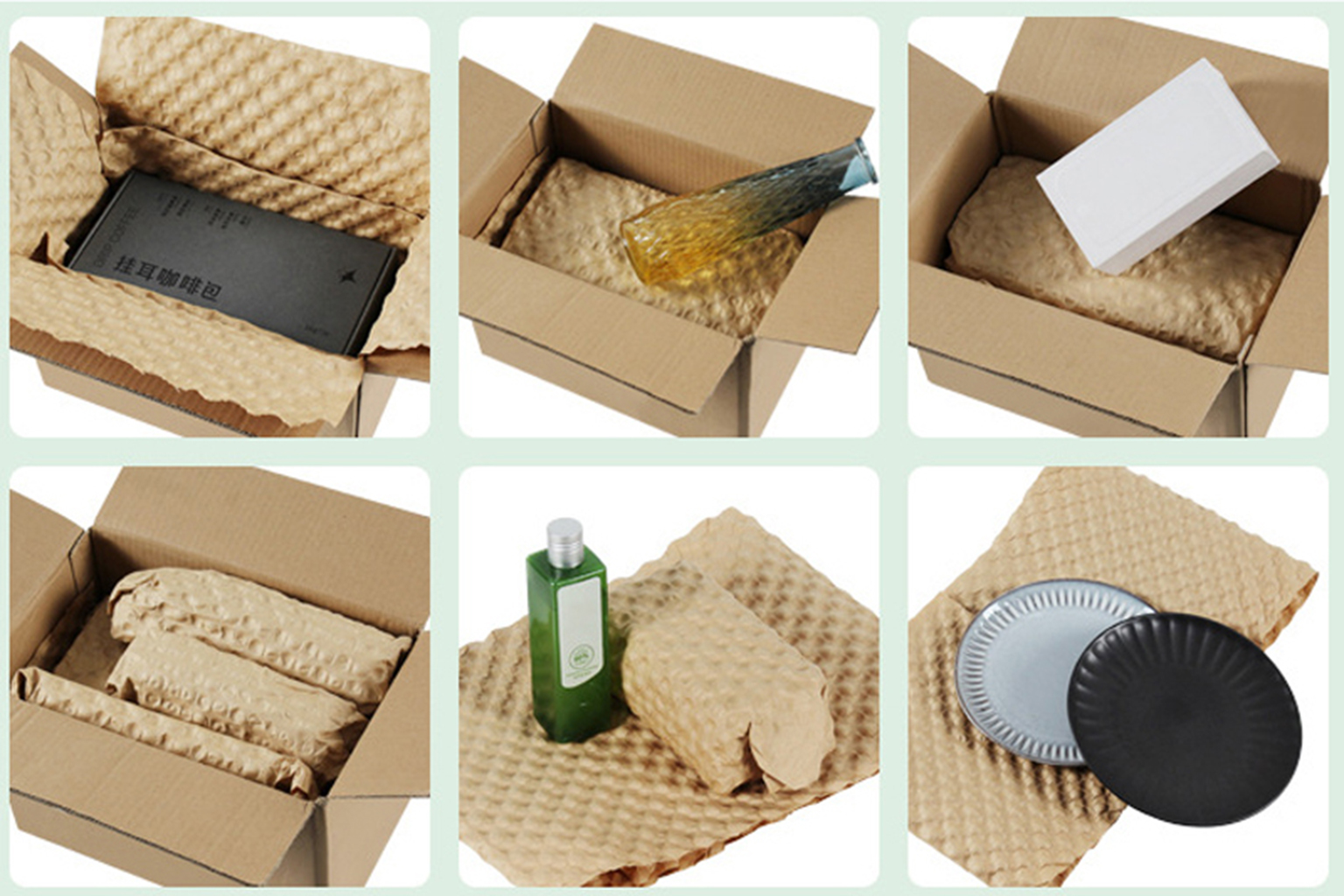
Kraft Paper
Kraft paper is one of the most common materials used in paper cushioning production. It is manufactured using the kraft pulping process, which produces paper with good tensile strength and durability. Depending on its grade and specifications, kraft paper can provide a balance of flexibility, tear resistance, and cushioning performance.
Brown kraft paper is widely used in protective packaging because of its natural appearance and practical performance. It is suitable for wrapping products, filling empty spaces in cartons, and protecting items during transportation. Some kraft paper bubble making machines can process kraft paper into structured cushioning materials that help absorb impacts and reduce direct contact between packaged products.
The appropriate kraft paper grade depends on the machine’s forming mechanism and the intended application. Buyers should confirm the recommended paper weight, thickness, roll width, and other material specifications with the equipment manufacturer before purchasing paper in bulk.
Recycled Kraft Paper
Recycled kraft paper is another potential material for paper cushioning production. It contains recovered paper fibers and can help businesses incorporate recycled content into their packaging operations.
This material may be suitable for companies that prioritize resource efficiency, packaging cost control, or recycled-content requirements. However, recycled paper can vary in fiber quality, strength, thickness, and surface consistency. These variations may affect feeding stability and the quality of the finished cushioning material.
When selecting recycled kraft paper, buyers should evaluate its tensile strength, tear resistance, moisture content, and consistency between batches. Paper with excessive dust, uneven thickness, or inconsistent strength may increase feeding problems, paper breaks, or production interruptions.
A machine trial using the intended recycled paper grade is a practical way to verify whether the material can meet production requirements.
Virgin Kraft Paper
Virgin kraft paper is produced primarily from newly processed wood fibers. Depending on the grade and manufacturing process, it can offer consistent fiber properties and reliable mechanical strength.
For applications involving heavier products, frequent handling, or demanding shipping conditions, a suitable virgin kraft paper grade may provide the strength needed for stable cushioning structures. Its performance depends on factors such as basis weight, fiber composition, thickness, and paper construction.
Virgin kraft paper may also be considered when consistent forming quality is a priority. Nevertheless, it is not automatically the best choice for every application. Buyers should compare its performance and cost with recycled alternatives under actual production conditions.
The final decision should be based on the required cushioning performance, machine compatibility, packaging cost, and customer expectations.
Different Paper Weights and Thicknesses
Paper weight and thickness are important factors when selecting materials for a kraft paper bubble making machine. Paper weight is commonly expressed in grams per square meter (GSM), while thickness is typically measured in micrometers or millimeters.
Lighter paper may be easier to process and can help reduce the amount of material used per package. However, if the paper is too thin or weak for the machine’s forming process, it may tear, wrinkle, or produce cushioning with insufficient structural strength.
Heavier paper can offer greater strength and durability, but it may require more forming force and may not be compatible with every machine. Excessive thickness can also affect feeding, folding, or shaping performance.
There is no single GSM range that is suitable for all kraft paper bubble making machines. The recommended range depends on the machine design, forming structure, required output, and intended packaging application. Always check the manufacturer’s specifications before selecting a paper grade.
Paper Rolls with Different Widths
Many kraft paper bubble making machines use roll-fed materials. In these systems, paper roll width must match the machine’s feeding and forming requirements.
Narrower rolls may be appropriate for compact machines or smaller packaging formats, while wider rolls may support higher-volume production or larger cushioning formats when the machine is designed for them. The maximum and minimum roll widths vary by model.
Roll diameter, core size, roll weight, and winding quality are also important. An incorrectly sized core may not fit the roll holder, while uneven winding can cause unstable feeding or alignment problems. Excessively heavy rolls may also require additional loading equipment.
Before ordering paper rolls, confirm the machine’s compatible width, maximum roll diameter, core dimensions, and loading capacity. Matching these specifications helps reduce material waste and avoid unnecessary downtime.
Colored and Printed Kraft Paper
Some packaging applications require materials that support brand recognition or a particular visual presentation. Depending on the machine’s feeding and forming design, colored kraft paper or certain printed paper grades may be usable.
Colored paper can help distinguish packaging lines or create a consistent brand appearance. Printed paper may also be considered for applications where branding or product identification is important.
However, printed and colored materials require additional checks. Ink coverage, coatings, surface friction, and paper stiffness can affect feeding and forming performance. Some inks or coatings may also influence recyclability, depending on their composition and local recycling requirements.
If branding is a priority, test the proposed paper before full-scale production. Confirm that the material can be processed without excessive slippage, tearing, surface damage, or inconsistent cushioning formation.
Can Coated or Specialty Paper Be Used?
Coated paper, laminated paper, and other specialty grades should not be assumed compatible with a standard kraft paper bubble making machine.
Coatings may change surface friction and flexibility, while laminated structures can behave differently from ordinary paper during folding or forming. Some specialty papers may also require specific machine settings or a different forming mechanism.
These materials may be suitable for specialized applications, but compatibility depends on the equipment design and the material’s physical properties. Buyers should provide the manufacturer with a sample or complete technical specification for evaluation.
For businesses focused on recyclable protective packaging, it is also important to check whether coatings, adhesives, or laminations affect the recyclability of the finished material in the intended market.
How to Choose the Right Material for Your Application
Selecting a suitable material requires more than comparing paper prices. The paper must work with the machine and provide the necessary protection for the products being shipped.
First, check machine compatibility. Confirm the accepted paper type, GSM range, thickness, roll width, core size, and maximum roll diameter. These specifications should be established before placing a bulk material order.
Second, evaluate the protection requirements. Lightweight products may need less robust cushioning than fragile, heavy, or irregularly shaped items. Consider the product’s weight, fragility, shipping distance, handling frequency, and carton design when choosing the paper grade.
Third, assess production performance. Test whether the paper feeds smoothly, forms consistently, and runs at the required production speed. Monitor paper breaks, jams, edge damage, and material waste during the trial.
Finally, compare the total operating cost. A lower-priced paper grade may not be economical if it causes frequent downtime or produces inconsistent cushioning. Consider material cost, waste rate, labor requirements, machine efficiency, and packaging performance together.
A controlled production trial is often the most reliable way to compare different paper grades before committing to large quantities.
Common Material Selection Mistakes to Avoid
One common mistake is choosing paper based only on price. Low-cost paper may have inconsistent strength or dimensions, which can lead to feeding issues and increased waste. A better approach is to evaluate cost alongside processing stability and finished cushioning quality.
Another mistake is assuming that all kraft paper grades are interchangeable. Different grades can vary in fiber composition, stiffness, moisture content, and surface characteristics. Even paper with the same GSM may behave differently during processing.
Buyers should also avoid overlooking roll specifications. Incorrect roll width, core size, or winding quality can prevent smooth operation even when the paper itself is suitable.
Finally, avoid ordering large quantities before confirming compatibility. A sample test or machine trial can help identify material problems early and reduce the risk of unnecessary inventory costs.
Conclusion
A kraft paper bubble making machine may process several types of paper, including brown kraft paper, recycled kraft paper, virgin kraft paper, and certain colored or printed grades. However, the actual range of compatible materials depends on the machine’s design, forming process, and technical specifications.
When selecting paper, buyers should consider strength, GSM, thickness, roll dimensions, feeding stability, cushioning performance, and total operating cost. Specialty or coated papers require additional compatibility checks.
For the most reliable results, confirm the manufacturer’s material requirements and test the intended paper grade before starting large-scale production. The right combination of machine and paper helps improve production consistency, reduce waste, and deliver protective packaging that meets the needs of the application.
FAQ
1. What type of paper is commonly used in a kraft paper bubble making machine?
Kraft paper is one of the most common materials used in paper cushioning production. Depending on the machine design, suitable materials may include brown kraft paper, recycled kraft paper, and virgin kraft paper.
2. Can recycled kraft paper be used in a kraft paper bubble making machine?
Yes, some machines can process recycled kraft paper. However, recycled paper quality varies, so buyers should check its strength, thickness, moisture content, and consistency to ensure stable feeding and forming performance.
3. Can a kraft paper bubble making machine use virgin kraft paper?
Yes, if the paper meets the machine’s specifications. Virgin kraft paper can provide consistent fiber properties and mechanical strength, making it a potential choice for applications requiring reliable cushioning performance.
4. What GSM paper is suitable for a kraft paper bubble making machine?
The suitable GSM range depends on the machine model and its forming mechanism. Buyers should confirm the recommended paper weight with the manufacturer and test the selected grade before ordering in bulk.
5. Can a kraft paper bubble making machine process colored or printed paper?
Some machines may process colored or printed kraft paper, depending on the paper’s surface properties and the equipment design. Testing is recommended to check feeding stability, forming quality, and resistance to tearing or slippage.


