

Introduction
Protective packaging plays an important role in preventing product damage during storage, handling, and transportation. For e-commerce businesses, logistics providers, manufacturers, and packaging suppliers, choosing the right cushioning material can affect packaging efficiency, shipping costs, product safety, and environmental performance.
Traditional plastic bubble wrap has long been used to protect fragile products because of its lightweight structure and air-filled cushioning pockets. However, as businesses explore alternatives to conventional plastic packaging, kraft paper cushioning has become an increasingly popular option. A kraft paper bubble making machine enables manufacturers to produce structured paper cushioning materials designed for wrapping products and protecting items during shipment.
So, which is better: kraft paper cushioning or traditional plastic bubble wrap? The answer depends on your product requirements, packaging workflow, budget, and sustainability goals. This article compares the two options in terms of cushioning performance, material costs, production efficiency, environmental considerations, and practical applications.
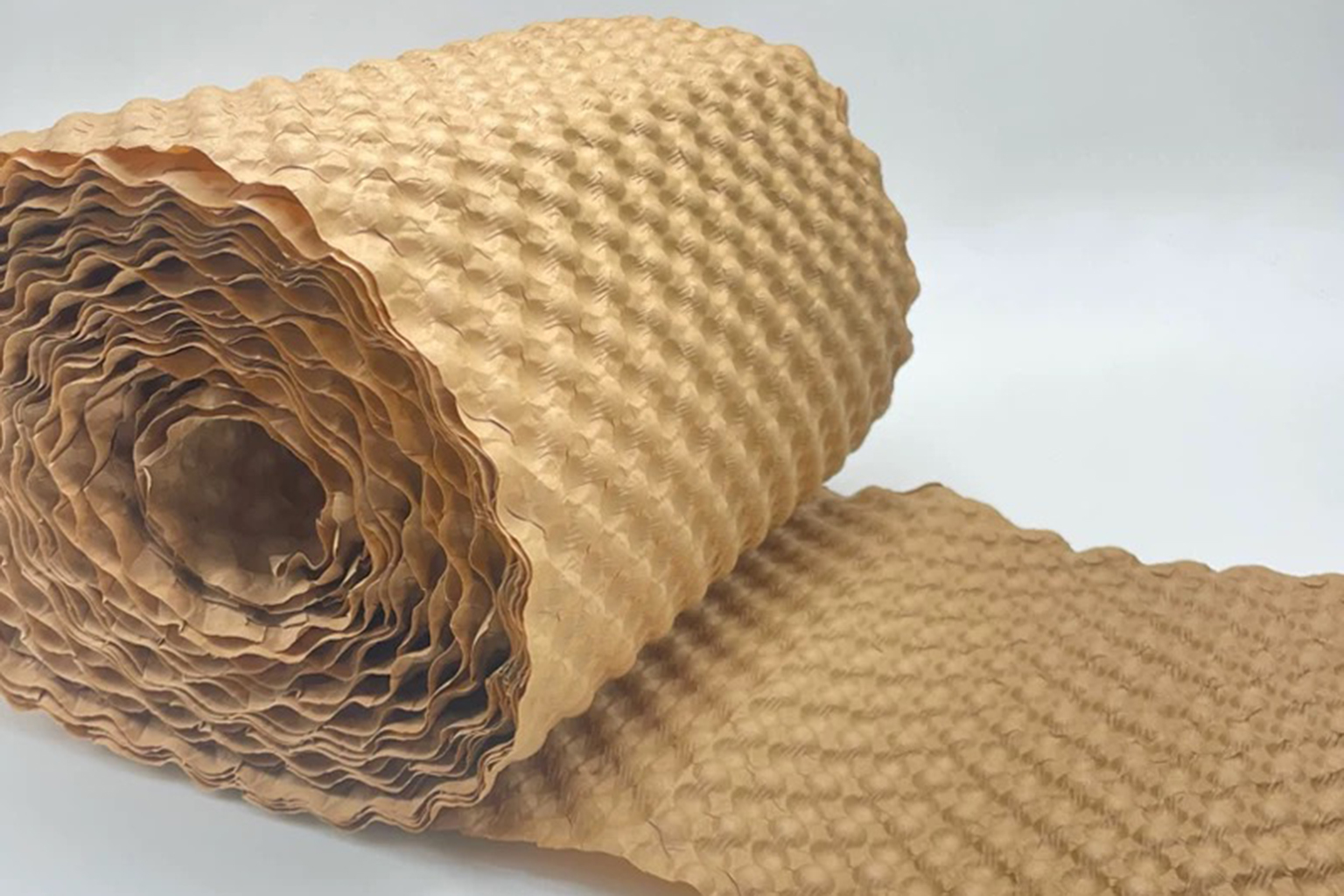
What Is a Kraft Paper Bubble Making Machine?
A kraft paper bubble making machine is equipment designed to process kraft paper into structured cushioning materials. Depending on the machine’s forming technology, it may produce bubble-like, folded, or other three-dimensional paper structures that provide space and flexibility for protective packaging.
These paper-based materials can help protect products from scratches, minor impacts, and movement inside shipping cartons. They are used in e-commerce fulfillment, logistics, warehousing, consumer goods distribution, and packaging material manufacturing.
For businesses that regularly consume large quantities of protective packaging, producing paper cushioning with dedicated equipment may offer greater control over material availability and packaging workflows. However, the machine’s actual output, production speed, and material compatibility depend on its design and specifications.
What Is Traditional Bubble Wrap?
Traditional bubble wrap is a protective packaging material generally made from plastic film, commonly polyethylene, with sealed air-filled pockets distributed across its surface. The trapped air helps absorb impacts and reduce the risk of damage during handling and transportation.
Bubble wrap is widely used for glassware, electronics, decorative items, household products, and other goods requiring cushioning. Its flexibility allows it to wrap around products of different shapes, while its lightweight structure adds relatively little shipping weight.
However, conventional plastic bubble wrap may be difficult to recycle through some local waste systems, particularly when collection programs do not accept flexible plastic packaging. Businesses must consider local recycling availability and customer disposal practices when evaluating its environmental impact.
Kraft Paper Cushioning vs. Traditional Bubble Wrap: Key Differences
| Comparison Factor | Kraft Paper Cushioning | Traditional Plastic Bubble Wrap |
| Main material | Kraft paper | Plastic film, commonly polyethylene |
| Cushioning structure | Formed paper structure | Sealed air-filled pockets |
| Product protection | Depends on paper structure and packaging design | Depends on bubble size, film properties, and air retention |
| Flexibility | Varies with paper weight and forming method | Generally flexible and easy to wrap around products |
| Moisture resistance | Usually limited unless specially treated | Generally offers better resistance to moisture |
| Environmental considerations | May fit paper recycling streams where accepted | Flexible plastic recycling availability varies by location |
| Production equipment | Kraft paper bubble making or paper-forming equipment | Plastic film bubble wrap production equipment |
| Typical applications | Paper-based cushioning, wrapping, and void filling | Wrapping fragile items and impact protection |
| Storage and handling | Depends on the material’s shape and packing format | Air-filled structure may occupy substantial storage space |
| Best suited for | Businesses prioritizing paper-based packaging | Businesses requiring established air-pocket cushioning performance |
The exact performance of either material depends on its construction, quality, and intended application. Neither option is automatically superior for every packaging requirement.
Cushioning Performance: Which Protects Products Better?
Product protection is often the most important factor when choosing packaging materials. The right cushioning material should reduce damage caused by impacts, vibration, compression, and movement during transportation.
Kraft Paper Cushioning
Kraft paper cushioning uses its formed structure, paper strength, and flexibility to help protect packaged products. Depending on the design, it can provide surface protection, separate items, or fill empty spaces inside cartons.
Its performance depends on paper grammage, forming quality, material structure, and how the cushioning is arranged around the product. For fragile or high-value goods, businesses should conduct packaging tests under realistic shipping conditions.
Traditional Bubble Wrap
Plastic bubble wrap provides cushioning through sealed air pockets that absorb and distribute impact forces. It can conform to irregular shapes and create a protective layer around individual products.
However, performance varies according to bubble size, film thickness, air retention, and the number of layers used. Punctured or compressed bubbles may reduce protection.
Which is better?
Traditional bubble wrap may be preferable when a product requires flexible wrapping and established air-pocket cushioning. Kraft paper cushioning can be suitable for surface protection, separation, and void filling when its structure meets the application’s protection requirements. Testing is necessary for products with demanding shipping conditions.
Environmental Impact: Paper vs. Plastic
Environmental considerations are an important reason businesses evaluate paper-based protective packaging. However, comparing materials requires looking beyond whether they are made from paper or plastic.
Kraft Paper Cushioning
Kraft paper is a paper-based material that may be recyclable through established paper collection systems, provided the material is accepted by the local recycling program and is not contaminated or treated in a way that prevents recycling.
Businesses should also consider the paper’s recycled content, sourcing practices, production energy, transportation, and the amount of material used per shipment. Paper packaging is not automatically more sustainable in every situation, especially if it requires substantially more material or energy to provide equivalent protection.
Traditional Bubble Wrap
Plastic bubble wrap is lightweight and can provide effective cushioning with relatively little material. Nevertheless, flexible plastic packaging is not accepted by every recycling program, and collection and processing options vary by location.
Businesses using plastic bubble wrap should check local disposal requirements and consider whether their customers have access to suitable recycling facilities.
Which is better?
Kraft paper cushioning may be a practical choice for businesses seeking paper-based packaging and compatibility with available paper recycling systems. The overall environmental advantage depends on sourcing, material consumption, transportation, reuse, and end-of-life treatment.
Material Cost and Total Packaging Cost
Material price alone does not determine which packaging option is more economical. Businesses should evaluate the total cost of protecting each product or shipment.
Kraft Paper Cushioning Costs
The cost of kraft paper cushioning depends on paper specifications, material consumption, forming requirements, and the method used to produce or purchase the finished material.
Businesses that manufacture cushioning in-house may need to account for machine investment, electricity, labor, maintenance, and material waste. Producing paper cushioning on demand may reduce the need to store certain preformed packaging materials, but actual savings depend on the production workflow and material format.
Traditional Bubble Wrap Costs
Plastic bubble wrap is widely available in various roll widths, bubble sizes, and thicknesses. Its low weight and cushioning performance can make it cost-effective for many applications.
However, buyers should account for storage, transportation, material consumption, and the amount of bubble wrap required to protect each product. Using excessive layers can increase packaging costs without necessarily improving protection proportionately.
Which is better?
The more economical option depends on product dimensions, required protection, local material prices, labor costs, and packaging volume. Compare the cost per safely delivered product rather than only the price per roll or kilogram.
Packaging Efficiency and Workflow
Packaging efficiency affects labor productivity, order processing speed, and fulfillment capacity.
Kraft Paper Cushioning
A kraft paper bubble making machine can produce cushioning material for use in packaging operations. Depending on the model, adjustable speed, cutting functions, and automated feeding may help improve consistency and reduce manual preparation.
For businesses using paper cushioning at multiple packaging stations, equipment selection should account for output capacity, material collection, operator requirements, and integration with existing processes.
Traditional Bubble Wrap
Bubble wrap is generally ready to use when supplied in rolls or sheets. Operators can cut it to size and wrap products without operating a dedicated bubble wrap production machine.
This simplicity can be useful for businesses with low or variable packaging volumes. However, manual cutting, wrapping, and handling may require significant labor when order quantities are high.
Which is better?
Paper cushioning machinery may suit businesses with regular demand for paper-based cushioning and a suitable production workflow. Purchased bubble wrap may be more convenient for businesses that prefer ready-to-use materials and do not want to invest in additional production equipment.
Storage, Transportation, and Handling
Storage requirements influence warehouse space, material replenishment, and logistics costs.
Kraft paper cushioning can be supplied in different formats, depending on the product and equipment design. Some paper structures may be stored compactly before forming, while finished cushioning materials may require additional space. Buyers should evaluate the actual storage format rather than assume that paper packaging always saves space.
Traditional bubble wrap contains air-filled pockets, which can make the material bulky relative to its weight. This may increase the storage space required for large quantities, although roll dimensions and packaging arrangements affect the actual footprint.
Both materials can be handled efficiently when storage areas are designed around their dimensions, usage rates, and replenishment requirements.
Which is better?
The answer depends on whether the business stores raw paper, finished paper cushioning, or ready-to-use bubble wrap. Compare storage volume per usable unit of protective packaging and consider how frequently materials need to be replenished.
Moisture Resistance and Product Compatibility
The operating environment can determine which cushioning material is more suitable.
Kraft paper generally absorbs moisture more readily than conventional polyethylene bubble wrap unless it has been specially treated. High humidity, water exposure, and damp storage conditions can affect paper strength and cushioning performance.
Plastic bubble wrap usually provides better resistance to moisture and can be useful when packaging products that need protection from incidental water exposure. However, bubble wrap should not be treated as a complete moisture barrier for every application.
For food-related, medical, electronic, or other sensitive products, packaging materials should meet the relevant hygiene, regulatory, and product protection requirements. Additional inner packaging may be necessary regardless of the cushioning material.
Which is better?
Bubble wrap may be preferable in moisture-prone environments. Kraft paper cushioning is often a practical option for dry shipping conditions when paper-based packaging meets the required protection standards.
How to Choose Between Kraft Paper Cushioning and Bubble Wrap
The best choice depends on your business model, product characteristics, and operational priorities.
Choose kraft paper cushioning when:
Your business wants to expand paper-based protective packaging options.
Paper cushioning meets your products’ impact and surface protection requirements.
Your customers or target markets prefer paper packaging.
Your packaging workflow can support the required paper materials or production equipment.
Local recycling systems accept the specific paper cushioning material.
Choose traditional bubble wrap when:
Products require flexible wrapping around irregular shapes.
Air-pocket cushioning has been validated for the products being shipped.
Moisture resistance is an important consideration.
Ready-to-use packaging materials are more practical than in-house production.
Existing packaging workflows are already optimized for plastic bubble wrap.
Some businesses may benefit from using both materials. For example, paper cushioning can fill carton gaps while bubble wrap provides an additional protective layer around selected fragile items. Any combined packaging system should be tested to ensure that it provides suitable protection without unnecessary material use.
When Should You Invest in a Kraft Paper Bubble Making Machine?
For packaging material manufacturers, distributors, and businesses with high recurring demand, purchasing a kraft paper bubble making machine may provide greater control over cushioning production.
Before investing, estimate your monthly material consumption and compare the cost of purchasing finished paper cushioning with the cost of producing it in-house. Include equipment depreciation, raw materials, labor, energy, maintenance, waste, and the expected usable output.
You should also confirm the machine’s forming technology, compatible kraft paper specifications, production speed, output dimensions, automation features, and after-sales support.
Request samples and conduct production tests before making a decision. A machine that produces the required material consistently at an acceptable operating cost is generally more valuable than one selected solely for its maximum advertised speed.
For businesses with limited packaging demand, purchasing finished paper cushioning may be more economical than investing in dedicated equipment. The investment decision should be based on realistic production volume and the expected return over the machine’s working life.
Conclusion
Kraft paper cushioning and traditional plastic bubble wrap both offer useful protective packaging functions, but they differ in material structure, moisture resistance, production requirements, and environmental considerations.
Kraft paper cushioning can support businesses seeking paper-based packaging alternatives, particularly when local recycling systems accept the material and its protective performance meets product requirements. Traditional bubble wrap remains a practical choice for flexible wrapping, air-pocket cushioning, and applications where moisture resistance is important.
For packaging manufacturers and high-volume users, a kraft paper bubble making machine may help establish a consistent supply of paper cushioning materials. However, the decision should account for machine investment, production capacity, material compatibility, and total operating costs.
Ultimately, the better option is the one that protects products reliably, fits your packaging workflow, and meets your cost and sustainability objectives. Testing both materials under actual shipping conditions is the most dependable way to make the right choice for your business.
FAQ
What is the main difference between kraft paper cushioning and traditional bubble wrap?
Kraft paper cushioning uses a formed paper structure to protect products, while traditional bubble wrap uses sealed air-filled pockets made from plastic film. Both provide cushioning, but their moisture resistance, material properties, recycling options, and packaging applications differ.
Is kraft paper cushioning better than plastic bubble wrap?
Kraft paper cushioning may be better for businesses seeking paper-based packaging alternatives, while plastic bubble wrap may be more suitable for products requiring flexible wrapping, air-pocket cushioning, or greater moisture resistance. The best option depends on product protection requirements, cost, and sustainability goals.
Is kraft paper cushioning environmentally friendly?
Kraft paper cushioning may offer environmental benefits when it uses responsibly sourced or recycled paper and can be recycled through local paper collection systems. However, its overall environmental impact depends on material consumption, manufacturing, transportation, and disposal conditions.
Can kraft paper cushioning replace traditional bubble wrap?
Yes, in some applications. Kraft paper cushioning can protect products from surface scratches, minor impacts, and movement inside shipping cartons. However, products requiring specific impact protection or moisture resistance may still need plastic bubble wrap or another suitable protective material.
Which packaging material is more cost-effective?
The cost depends on material prices, packaging volume, labor, storage, and the amount of cushioning required per shipment. Businesses should compare the total cost per safely delivered product rather than evaluating material prices alone.


