

Introduction
Choosing the right honeycomb paper making machine is important for businesses that want to produce paper-based protective packaging efficiently and consistently. E-commerce companies, fulfillment centers, packaging suppliers, manufacturers, and logistics operations can use honeycomb paper to wrap products, fill empty spaces, protect surfaces, and reduce dependence on plastic-based packaging materials.
However, honeycomb paper making machines are available in different configurations, production capacities, paper compatibility ranges, and automation levels. The most suitable machine depends on the type of paper being processed, required output, packaging applications, available production space, and expected operating conditions.
Instead of selecting a machine based only on its maximum speed or price, buyers should evaluate the complete production process and match the machine specifications with their actual business requirements.
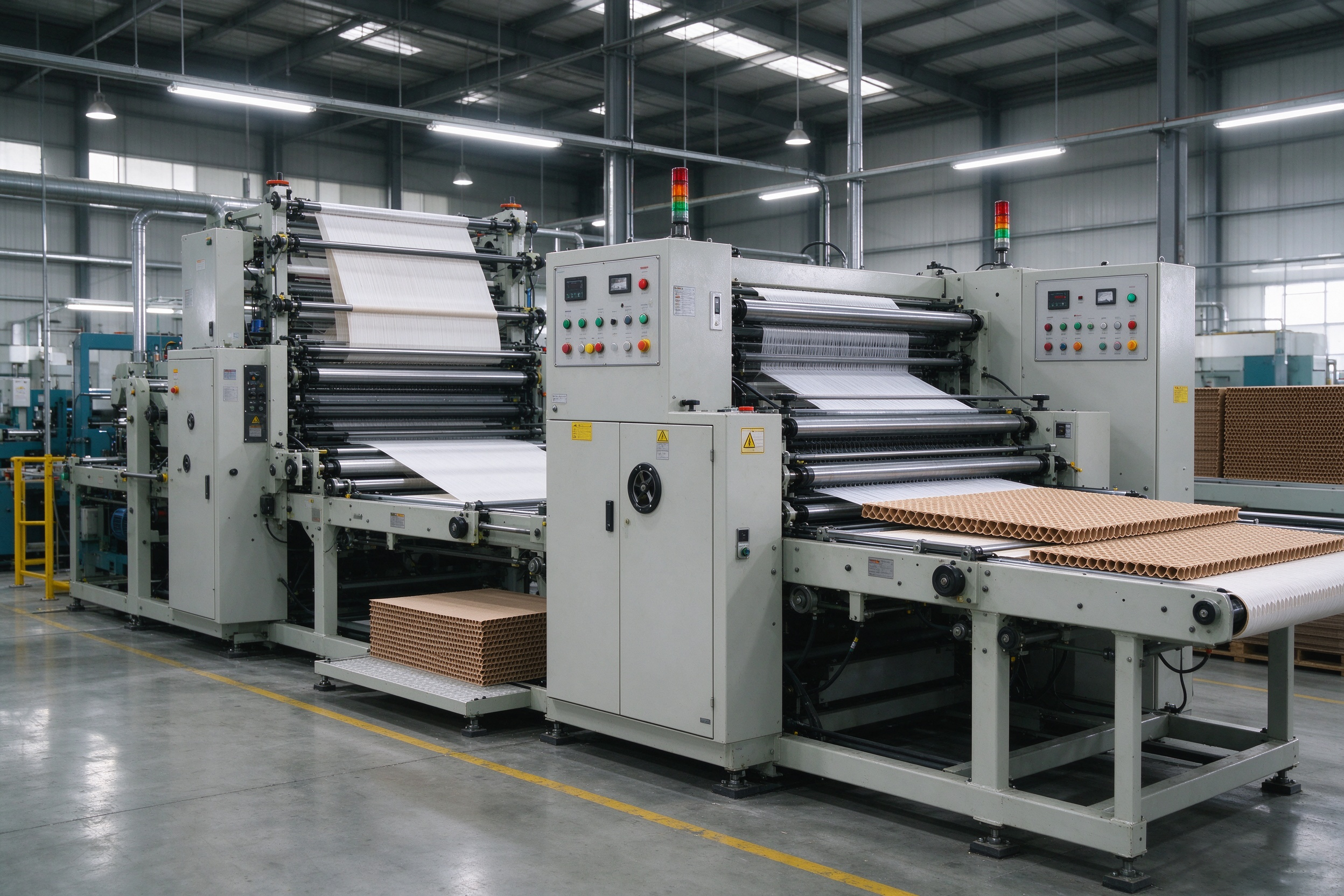
Determine Your Production Requirements
The first step is to understand how much honeycomb paper your business needs to produce.
A small packaging operation with relatively low daily consumption may not need a high-output industrial machine. In contrast, packaging manufacturers and large fulfillment centers may require continuous production and higher processing speeds.
Consider your current and expected production volume, daily operating hours, number of operators, and future demand. Choosing a machine with sufficient capacity can help avoid production bottlenecks as your packaging requirements increase.
It is also useful to distinguish between occasional, batch, and continuous production. Businesses with frequent packaging orders may benefit from a machine designed for stable long-term operation rather than a basic model intended for lower workloads.
Check Paper Compatibility
Paper compatibility is one of the most important factors when selecting a honeycomb paper making machine.
Different machines may support different paper widths, thicknesses, weights, and material characteristics. Before purchasing, confirm that the machine can process the paper specifications your business currently uses.
Important paper parameters may include:
Paper width
Paper thickness
Paper weight or GSM
Roll dimensions
Paper strength
Paper moisture and condition
If you plan to use different types of kraft paper or other suitable paper materials, ask the manufacturer about the machine’s compatible material range.
A machine that cannot consistently feed and process the required paper may result in jams, uneven forming, inconsistent honeycomb structures, or reduced production efficiency.
Consider the Required Honeycomb Paper Size
Honeycomb paper can be produced in different widths and configurations depending on the intended packaging application.
For example, narrow honeycomb paper may be convenient for wrapping smaller products, while wider material may be more suitable for larger products or protective packaging applications.
Before selecting a machine, determine the typical dimensions of the packaging material you need. Consider both the original paper roll width and the final expanded honeycomb paper size.
If your business serves customers with different packaging requirements, a machine with suitable width adjustment or configuration flexibility may provide greater production versatility.
Evaluate Machine Production Speed
Production speed is another important consideration, particularly for businesses processing large packaging volumes.
A higher-speed honeycomb paper making machine can potentially produce more packaging material within a given period. However, maximum speed should not be considered separately from actual production quality and paper compatibility.
A machine operating at very high speed may not provide practical benefits if the feeding system, forming mechanism, cutting system, or paper material cannot maintain stable performance at that speed.
When comparing machines, look at the relationship between rated speed, usable production output, paper specifications, and operating conditions. Ask manufacturers whether the stated speed represents maximum machine speed or typical production performance.
Consider Machine Automation
The level of automation can have a significant effect on operating efficiency and labor requirements.
Basic machines may require more manual intervention for feeding, adjustment, cutting, or material handling. More automated systems can integrate functions such as automatic feeding, tension control, cutting, length setting, and other production processes.
For businesses with relatively low production volumes, a simpler machine may be sufficient. High-volume packaging operations may benefit from automation that reduces manual work and supports more consistent production.
When evaluating automation, consider not only the number of automated functions but also whether they are useful for your specific workflow.
Evaluate Honeycomb Paper Quality
The machine should be capable of producing consistent honeycomb structures that meet your packaging requirements.
Important quality characteristics can include cell formation, expansion consistency, paper alignment, cutting accuracy, material strength, and overall appearance.
Inconsistent production may reduce the protective performance of honeycomb paper or make it more difficult to use during packaging.
Before purchasing, ask the supplier for production samples made with paper similar to your own. Testing actual material can provide more useful information than relying only on general machine specifications.
Consider Cutting and Output Functions
Depending on your packaging operation, you may need the machine to produce honeycomb paper in continuous rolls, predetermined lengths, sheets, or other formats.
If the machine includes cutting functions, check whether the cutting method and accuracy match your production requirements.
For example, a packaging company that prepares material in advance may prefer automated length control and cutting, while a fulfillment center may require flexible output lengths based on different package sizes.
The output format should therefore be considered together with your packaging workflow.
Check Machine Size and Installation Requirements
Available production space should also be considered before purchasing a honeycomb paper making machine.
Check the machine’s overall dimensions, material loading area, electrical requirements, operating space, and maintenance access. Adequate space around the equipment can make loading, adjustment, cleaning, and maintenance easier.
For businesses with limited workshop or packaging-area space, machine footprint can be particularly important.
Also consider how raw paper rolls will be transported to the machine and how finished honeycomb paper will be stored or transferred to the packaging line.
Evaluate Ease of Operation and Maintenance
A machine that is difficult to operate or maintain may increase downtime and training requirements.
Look for practical features such as an intuitive control system, accessible adjustment points, straightforward material loading, and clear operating procedures.
Maintenance requirements should also be considered before purchase. Ask the manufacturer about routine cleaning, lubrication, replacement parts, wear components, and recommended maintenance intervals.
Easy access to critical components can reduce maintenance time and help operators identify problems before they affect production.
Consider Energy Consumption
Energy efficiency can influence the long-term operating cost of a honeycomb paper making machine.
The actual energy consumption depends on factors such as motor power, machine configuration, operating speed, production volume, and operating hours.
Rather than comparing motor power alone, buyers should ask manufacturers for relevant energy consumption information under typical operating conditions.
For businesses operating the machine for many hours per day, even moderate differences in energy use can affect total operating expenses over time.
Check Machine Safety Features
Safety should be considered when selecting any industrial packaging machine.
Depending on the machine design, relevant safety features may include emergency stops, protective covers, electrical protection, guarded moving components, and other mechanisms designed to reduce operational risks.
Operators should also receive appropriate instructions for machine setup, material loading, adjustment, cleaning, and maintenance.
Before purchasing, review the machine’s safety design and documentation to ensure that it is suitable for your workplace requirements.
Evaluate Manufacturer Support
The machine itself is only one part of the purchasing decision. Manufacturer support can also affect long-term equipment performance.
A reliable supplier should be able to provide technical specifications, installation guidance, operating instructions, troubleshooting support, spare parts, and maintenance information.
For export customers, after-sales communication and remote technical support can be particularly important.
Before placing an order, ask about warranty terms, spare parts availability, response times, operator training, and technical support arrangements.
Compare Standard and Customized Machines
Standard honeycomb paper making machines can be suitable when your production requirements match the manufacturer’s existing configuration.
However, some businesses may require customized features because of specific paper sizes, output formats, production speeds, packaging lines, or space limitations.
Customization may involve feeding systems, paper widths, cutting functions, control systems, machine dimensions, or other production features.
If customization is required, provide the manufacturer with detailed information about your paper material, desired output, production volume, and installation environment. This allows the supplier to determine whether the requested configuration is technically practical.
Consider Total Cost of Ownership
The purchase price is important, but it should not be the only cost considered.
The total cost of owning a honeycomb paper making machine may include the initial equipment price, shipping, installation, electricity, labor, maintenance, spare parts, and potential downtime.
A lower-priced machine may not necessarily provide lower long-term operating costs if it requires frequent maintenance or has limited production capacity.
For this reason, buyers should compare machines based on their expected production performance and operating costs rather than looking only at the initial quotation.
Common Mistakes When Choosing a Honeycomb Paper Making Machine
One common mistake is choosing a machine based only on maximum production speed. Actual output depends on paper material, machine configuration, operating conditions, and production stability.
Another mistake is failing to confirm paper compatibility before placing an order. Differences in paper width, thickness, weight, and roll specifications can affect machine performance.
Some buyers also overlook installation space, maintenance access, spare parts, and after-sales support. These factors may not appear in the initial machine specification but can have an important effect on long-term operation.
Finally, businesses should avoid selecting a machine without considering future production requirements. If packaging demand is expected to increase, the machine should provide sufficient capacity and flexibility for planned growth.
Honeycomb Paper Making Machine Selection Checklist
Before purchasing a machine, buyers should confirm:
Required daily or monthly production volume
Paper width and thickness
Paper weight or GSM
Raw material roll specifications
Required honeycomb paper width
Output format and cutting requirements
Production speed
Automation level
Machine dimensions and installation space
Power requirements
Safety features
Maintenance requirements
Spare parts availability
Manufacturer technical support
Warranty terms
Customization options
Total operating cost
Having these specifications prepared can make communication with manufacturers more efficient and help businesses compare different machines more accurately.
Conclusion
Choosing the right honeycomb paper making machine requires more than comparing machine speed and purchase price. Businesses should evaluate production volume, paper compatibility, honeycomb paper size, automation, output quality, cutting functions, installation requirements, maintenance, energy consumption, safety, and manufacturer support.
For packaging suppliers, e-commerce businesses, fulfillment centers, and other operations, the right machine should match both current production requirements and potential future demand. By evaluating the complete production process and confirming specifications with the manufacturer, buyers can select equipment that supports stable production, consistent honeycomb paper quality, and efficient packaging operations.
FAQ
1. What should I consider when choosing a honeycomb paper making machine?
Consider production volume, paper specifications, machine speed, honeycomb paper size, automation, output format, machine dimensions, energy consumption, maintenance, safety, and technical support.
2. What types of paper can a honeycomb paper making machine process?
The compatible paper depends on the machine design. Kraft paper and other suitable paper materials may be used, but buyers should confirm the supported paper width, thickness, weight, roll size, and material characteristics with the manufacturer.
3. Is a high-speed honeycomb paper making machine always better?
Not necessarily. A high-speed machine can be useful for high-volume production, but actual performance also depends on paper compatibility, forming stability, feeding performance, output quality, and operating conditions.
4. Should I choose a standard or customized honeycomb paper making machine?
A standard machine may be suitable when its specifications match your production requirements. A customized machine can be considered when you need specific paper widths, output formats, cutting functions, automation, or other non-standard features.
5. Why is manufacturer support important when buying a honeycomb paper making machine?
Technical support can help with installation, operation, troubleshooting, maintenance, spare parts, and operator training. Reliable after-sales support can help reduce downtime and support long-term machine operation.
6. How can I compare the total cost of different honeycomb paper making machines?
Consider not only the purchase price but also energy consumption, labor, maintenance, spare parts, installation, shipping, and potential downtime. Comparing these factors provides a more complete view of long-term equipment costs.


