

Introduction
Protective packaging plays an important role in e-commerce, logistics, warehousing, and manufacturing. Products need suitable cushioning to reduce movement, impact, and damage during transportation. As order volumes increase, businesses must also find ways to produce protective packaging materials quickly while controlling labor and operating costs.
Paper cushioning can be produced manually by cutting, crumpling, folding, or preparing paper according to packaging requirements. Although this approach may work for small-scale operations, it can become inefficient when packaging volumes increase.
A Paper Cushion Machine provides an automated alternative by producing protective paper cushioning more quickly and consistently. But which option is more efficient: a Paper Cushion Machine or manual paper cushion making?
The answer depends on production volume, labor costs, packaging requirements, available workspace, and investment budget. However, for businesses with continuous or high-volume packaging needs, automated production generally provides significant efficiency advantages.
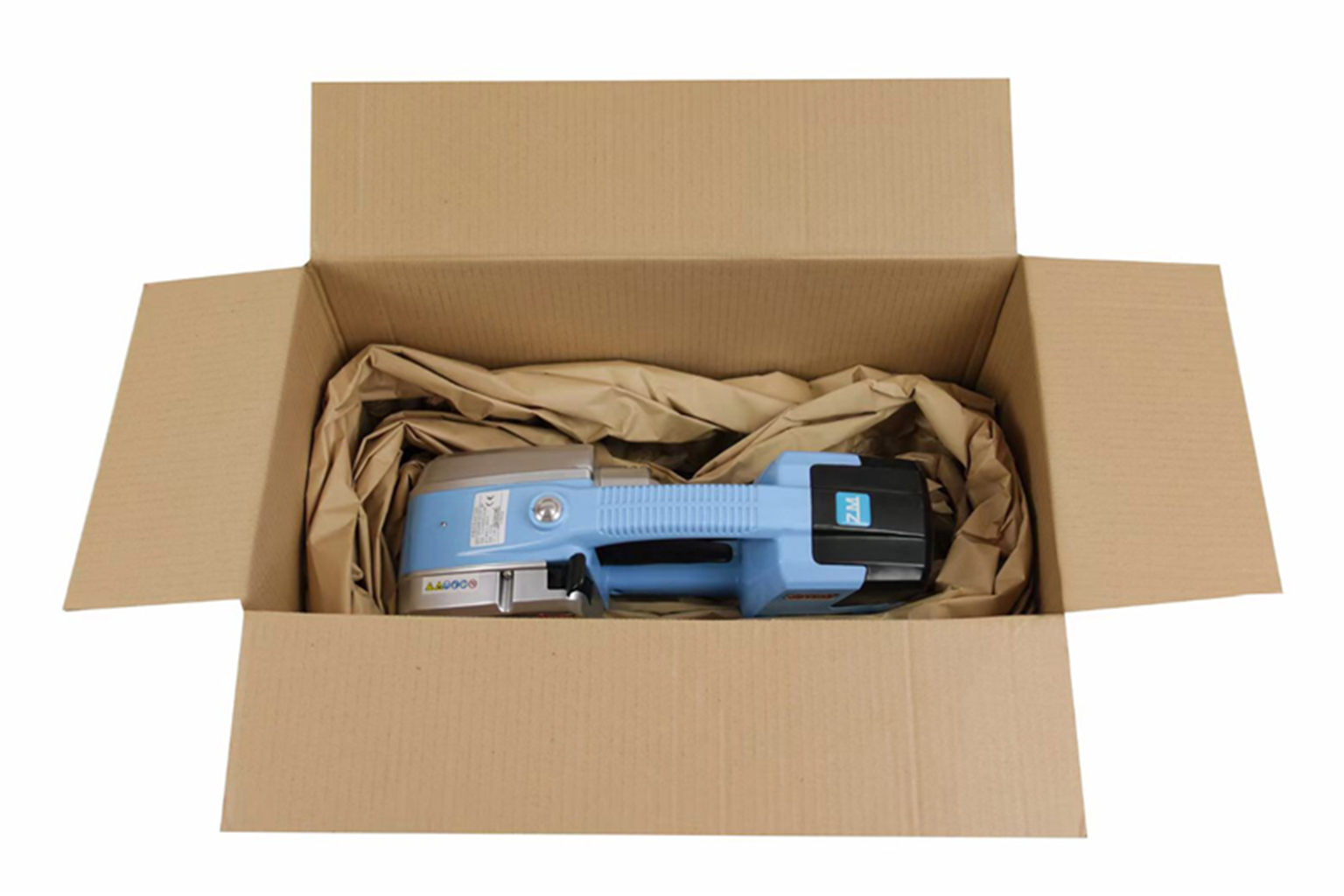
What Is Manual Paper Cushion Making?
Manual paper cushion making involves preparing protective paper material by hand. Workers may cut, fold, crumple, or shape paper before placing it inside cartons to protect products.
This method requires relatively little equipment and can be suitable for small businesses, occasional shipments, prototypes, or operations with very low packaging volumes.
The main advantage of manual production is its low initial investment. Businesses can begin using paper cushioning without purchasing specialized machinery.
However, manual preparation requires continuous labor. As the number of packages increases, workers need to spend more time preparing cushioning material, which can affect overall packing efficiency.
What Is a Paper Cushion Machine?
A Paper Cushion Machine is automated packaging equipment designed to convert paper into protective cushioning material. Instead of manually preparing each piece of cushioning, operators can use the machine to produce the required material as part of the packaging workflow.
The machine can be positioned near packing stations so that cushioning is produced when needed. This reduces repetitive manual preparation and can help create a more standardized packaging process.
Depending on the machine configuration, production capacity, paper compatibility, and application, a Paper Cushion Machine can support small, medium, or high-volume packaging operations.
Production Speed: Machine vs. Manual Work
Production speed is one of the clearest differences between automated and manual paper cushioning.
With manual production, the amount of cushioning that can be prepared depends directly on the number of available workers and how quickly they can perform repetitive tasks. When order volumes increase, businesses may need additional employees to maintain packaging output.
A Paper Cushion Machine can continuously produce cushioning material at a controlled production rate. This allows packaging teams to obtain protective material without spending significant time preparing it manually.
For high-volume packaging operations, automated production can therefore provide much greater productivity and make it easier to handle peak-season demand.
Labor Requirements
Labor is another important factor when comparing the two methods.
Manual paper cushion making requires employees to perform repetitive preparation tasks. Although each individual task may take only a short time, the total labor requirement can become significant when hundreds or thousands of packages are processed every day.
A Paper Cushion Machine automates the main cushioning production process. Operators can spend more time on product inspection, carton assembly, order fulfillment, and other value-added activities.
This does not necessarily eliminate labor completely. Operators are still needed to feed materials, monitor the machine, adjust settings, perform maintenance, and manage the packing process. However, the machine can reduce the amount of time spent on repetitive cushioning preparation.
Consistency of Cushioning
Consistency is important when protective packaging is used across large numbers of shipments.
Manual paper preparation can vary from one operator to another. Differences in the amount, shape, density, or arrangement of cushioning may result in inconsistent packaging.
A properly adjusted Paper Cushion Machine can provide more standardized cushioning output. This helps businesses establish a more consistent packing process and makes it easier for workers to follow standardized packaging procedures.
Consistent cushioning can also help businesses improve product protection while avoiding excessive use of packaging material.
Packaging Efficiency
Packaging efficiency involves more than simply producing cushioning quickly. The entire workflow should allow products to be packed with minimal unnecessary movement and waiting time.
With manual paper cushioning, workers may need to stop packing, prepare the paper, and then return to the package. This can interrupt the packing process.
A Paper Cushion Machine can produce cushioning directly at or near the packing station. Operators can create the required material when needed and immediately place it around the product.
This on-demand approach can streamline packaging operations and reduce unnecessary handling.
Material Utilization
Material efficiency is another factor businesses should consider.
When preparing paper cushioning manually, workers may use more material than necessary because it is difficult to maintain consistent quantities and shapes. Some businesses may also prepare large amounts of cushioning in advance, resulting in unused material.
A Paper Cushion Machine can provide more controlled production. Operators can produce cushioning based on actual packaging requirements, helping improve material management.
The machine itself does not automatically guarantee lower material consumption. Proper settings, suitable paper selection, product dimensions, and standardized packing procedures are still essential for achieving good material efficiency.
Space and Storage Requirements
Manual paper cushioning can require storage space for both raw paper and pre-prepared cushioning. If workers prepare cushioning in advance, the finished material can occupy additional warehouse or packing-station space.
A Paper Cushion Machine supports on-demand production, which can reduce the need to store large quantities of finished cushioning material.
Instead, businesses can store paper raw materials and produce cushioning when required. This approach may help improve workspace organization, particularly in fulfillment centers where packing space is limited.
Investment and Operating Costs
Manual paper cushion making has a major financial advantage: low initial investment. A business can start with basic paper materials and labor without purchasing specialized equipment.
However, labor costs increase as packaging volume grows. Businesses may eventually need additional workers to maintain production capacity.
A Paper Cushion Machine requires a higher initial investment, but the long-term cost structure can be different. Reduced repetitive labor, higher productivity, improved workflow, and potentially better material utilization can contribute to lower packaging costs per unit.
The best option should therefore be evaluated based on total cost of ownership rather than purchase price alone.
Maintenance and Downtime
Manual paper preparation does not require machine maintenance, which makes it attractive for very small operations.
A Paper Cushion Machine, however, requires regular cleaning, inspection, adjustment, and replacement of certain wear components. Businesses should include maintenance in their operating plans.
At the same time, a reliable machine can provide stable production for extended periods when properly maintained. Selecting a supplier that provides technical support and spare parts can help minimize potential downtime.
Scalability for Growing Businesses
Manual paper cushion making can work well when packaging volumes are low. However, scaling the process can require additional employees, workspace, and management.
For growing businesses, this can make manual production increasingly difficult to manage.
A Paper Cushion Machine provides a more scalable approach. Once the machine is installed and properly configured, businesses can increase packaging output without increasing cushioning-preparation labor at the same rate.
This makes automated cushioning production particularly attractive for e-commerce companies, fulfillment centers, manufacturers, and logistics businesses expecting continued order growth.
Which Option Is More Sustainable?
Both manual and machine-produced paper cushioning can support paper-based packaging strategies. The environmental impact depends on factors such as paper sourcing, material consumption, energy use, transportation, and recycling.
A Paper Cushion Machine can support sustainable packaging by helping businesses produce cushioning on demand and potentially reduce unnecessary material use. It can also reduce dependence on certain plastic-based protective packaging materials when paper cushioning is suitable for the application.
However, automation itself does not automatically make a packaging operation sustainable. Businesses should evaluate the entire packaging process and select materials and production methods that provide the required protection with reasonable resource consumption.
Paper Cushion Machine vs. Manual Paper Cushion Making: A Quick Comparison
| Factor | Paper Cushion Machine | Manual Paper Cushion Making |
| Production speed | High and consistent | Depends on workers |
| Labor requirement | Lower for cushioning production | Higher |
| Output consistency | Generally more consistent | Can vary by operator |
| Initial investment | Higher | Low |
| Long-term scalability | Excellent for growing volume | Limited by labor |
| Material production | On demand | Manual preparation |
| Storage needs | Can reduce pre-made cushioning storage | May require more prepared material storage |
| Maintenance | Requires regular maintenance | No machine maintenance |
| High-volume packaging | Highly suitable | Less efficient |
| Small-volume packaging | May be unnecessary | Often practical |
When Should You Choose a Paper Cushion Machine?
A Paper Cushion Machine is generally worth considering when a business processes a large number of packages, needs consistent cushioning, experiences increasing labor costs, or wants to improve packing-station efficiency.
It can also be a good choice for businesses that want to standardize their packaging process and produce cushioning material on demand.
For very small businesses with occasional shipments, manual paper cushion making may still be more economical because it requires little initial investment.
The key is to compare your current packaging volume and labor costs with the expected productivity and operating costs of automated equipment.
How to Choose the Right Paper Cushion Machine
If automation is the better option for your business, several factors should be evaluated before purchasing a machine.
Consider production speed, compatible paper materials, cushioning quality, machine dimensions, automation level, energy consumption, ease of operation, maintenance requirements, safety features, and spare-parts availability.
It is also important to test the machine using your actual paper materials and products. This can help confirm whether the cushioning output provides sufficient protection and whether the equipment fits naturally into your existing packaging workflow.
Supplier experience and after-sales support should also be considered. A reliable supplier can provide installation guidance, technical assistance, spare parts, and troubleshooting support throughout the machine’s service life.
Conclusion
When comparing a Paper Cushion Machine vs. Manual Paper Cushion Making, both methods have their place in the packaging industry. Manual production offers a low-cost and simple solution for small-scale operations, while automated equipment provides clear advantages for businesses with higher and growing packaging volumes.
A Paper Cushion Machine can improve production speed, reduce repetitive labor, provide more consistent cushioning, optimize workflow, and support on-demand packaging material production. Although the initial investment is higher, the long-term benefits can make automation more cost-effective for many high-volume packaging businesses.
Ultimately, the right choice depends on your order volume, labor costs, packaging requirements, growth plans, and available budget. For businesses looking to improve efficiency and build a scalable packaging process, investing in a suitable Paper Cushion Machine can be a valuable step toward more productive and consistent operations.
FAQ


