

6 Key Features to Look for in a Heavy-Duty Industrial Shredding Machine
When you’re sourcing a heavy-duty industrial shredding machine, you’re not just buying equipment—you’re buying reliability, efficiency, and the peace of mind that your plant keeps moving without costly interruptions. This guide walks you through the six essential features you should prioritize, with practical examples, insider considerations, and the kind of candid advice you’d expect from a partner like EzCushion Machinery—not just a supplier.
1. Motor Power & Torque Capacity
Why Raw Power Isn’t Just About Horsepower
If you’ve ever watched a low-power shredder choke on dense material, you already understand why motor power and torque are the beating heart of a heavy-duty industrial shredding machine. Torque determines whether your shredder glides through metal scrap or stalls mid-process (a nightmare scenario you want to avoid).
Some procurement buyers focus solely on horsepower ratings. Fair enough—bigger numbers look impressive. But real-world performance comes from the balance between horsepower, torque curve, and gearbox durability. A supplier may give you flashy horsepower figures, but if torque dips under heavy loads, you won’t get the throughput promised.
| Motor Type | Torque Range | Best For | Cons | Typical Load |
|---|---|---|---|---|
| High-Torque Low-Speed | High | Metals, bulky waste | Higher cost | Heavy |
| Medium-Torque Dual-Motor | Medium | Recycling lines | More maintenance | Variable |
| Single-Shaft High-Speed | Lower | Plastics, packaging | Low torque | Light |
Key Points
• Prioritize torque curve over horsepower alone
• Look for overload protection in the drive system
• Choose gearbox systems designed for shock load
• Consider variable-speed control for tricky materials
• Match torque to your actual waste composition
2. Cutting System Design & Blade Material
The Difference Between Cutting and Truly “Shredding”
This is the part of the machine that makes or breaks your throughput. Blade type determines what materials the shredder thrives on. Some buyers underestimate this, thinking “a blade is a blade,” but that’s like saying “a truck is a truck”—try hauling steel beams with a half-ton pickup.
When you evaluate a machine, look at cutter geometry: hook style, thickness, stagger arrangement, and the clearance between blades. These tiny engineering details determine the bite, consistency, and lifespan of your shredding system.
The blade material also matters tremendously. Alloy steels are common, but when you’re processing abrasive materials like composites, fiberglass, or aluminum, you want something harder—think tool-steel or wear-resistant carbide coatings.
EzCushion Machinery often guides new buyers by running a test batch using the buyer’s actual materials. You’d be surprised how often early assumptions are wrong. For example, a furniture manufacturer thought they needed hardened steel blades for wood waste—turns out their waste stream included metal staples everywhere, so an upgraded alloy blade made more sense.
3. Durability, Build Quality & Machine Frame Structure
Because Replacement Costs Are Not Fun
If you’re buying a machine meant to eat metal, rubber, pallets, pipes—whatever your workflow demands—you want a frame that laughs at vibration and impact. A heavy-duty industrial shredding machine isn’t cheap, so think long-term: frame integrity, weld consistency, bearing placement, and the thickness of the shredder chamber walls.
A weakness here leads to micro-cracks, misalignment, excessive vibration, and even catastrophic failure. No procurement manager wants that phone call at 3 am.
EzCushion Machinery machines often use reinforced welded frames with multi-point stress distribution—sounds fancy, but basically it means the machine doesn’t flex under uneven loads. One customer in waste-to-energy operations described their previous shredder as “dancing across the floor.” They weren’t exaggerating. The new reinforced-frame machine solved the problem instantly.
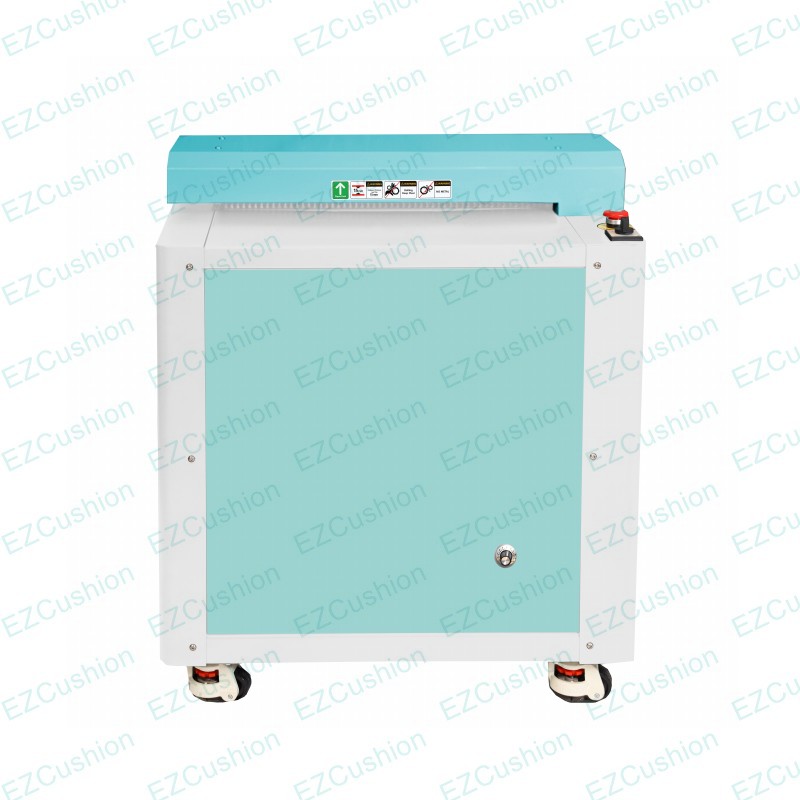
Heavy duty paper cardboard shredder 1
4. Safety Systems & Smart Automation
Because a Safe Team Is a Productive Team
Modern shredders aren’t just brute-force machines; they’re smart, intuitive, and loaded with protections. The days of “hope for the best and keep your distance” are long gone.
Look for features like:
– Intelligent reverse function (when overloaded)
– Automatic jam detection
– Emergency-priority controls
– Real-time diagnostics
– Lock-out/tag-out compliance
– Smart feeders that regulate load automatically
Automation also reduces operator fatigue and improves consistency. Imagine an inexperienced operator feeding material too fast, causing jams all day long. With an automated feed, your throughput becomes steady and predictable, and training time drops dramatically.
5. Throughput, Hopper Size & Feeding Efficiency
The Number Everyone Watches (But Often Misunderstands)
Throughput is often the first number a buyer looks at, but it can be misleading without context. Two shredders both rated for “3 tons per hour” can perform wildly differently depending on the material type, operator skill, feeding method, and cutter configuration.
A bigger hopper doesn’t automatically mean better performance, either. What you want is proportional hopper volume: one that suits your material flow without creating bridging or inconsistent feeding.
Feeding efficiency directly affects your cost per ton. A shredder with a smart feed system can outperform a larger one that relies on manual feeding.
Key Points
• Judge throughput using real-world material tests
• Confirm hopper shape reduces bridging
• Automated feed improves consistency
• Look at rotor/shaft size for continuous flow
• Match shredder speed to material density
6. Maintenance Accessibility, Support & Long-Term Costs
The Part Everyone Should Ask About First
It’s tempting to focus on raw performance, but the most overlooked factor is long-term maintenance. The cheapest shredder will eventually become the most expensive if parts are proprietary, hard to access, or poorly supported.
Choose a machine with wide access doors, modular components, and standardized bearings/blades where possible. At EzCushion Machinery, we often design machines so operators can access key components without full disassembly.
FAQs:
What materials can a heavy-duty industrial shredding machine handle?
Most machines can process plastics, metals, wood, rubber, and bulky waste, but exact capability depends on torque and cutter design.
How do I know which shredder size is right for my facility?
Match the machine to your material type, volume, and feeding method. Suppliers like EzCushion Machinery can run test batches to guide you.
How often do industrial shredder blades need replacement?
Anywhere from a few weeks to a year depending on material abrasiveness and blade material.
Should I prioritize torque or horsepower?
Torque is usually more important because it determines the machine’s ability to handle dense or tough materials without stalling.
How important is automation in modern shredding systems?
Very. Automation improves safety, reduces operator load, and increases throughput consistency.
Conclusion
When you’re on the hunt for a heavy-duty industrial shredding machine, the best decision comes from balancing power, design, durability, automation, throughput, and long-term support. Every buyer’s needs are slightly different—your materials, your budget, your workflow, your growth plans. But one thing stays the same: choosing a machine that performs reliably day after day saves money, stress, and the embarrassment of unexpected downtime.
If you want a shredder that’s built to last and backed by real engineering expertise, consider partnering with EzCushion Machinery. You’ll get not just a machine but a long-term ally in your production line. Ready to explore options tailored for your plant? Reach out and get matched with a model that suits your material flow, budget, and long-term production goals.


